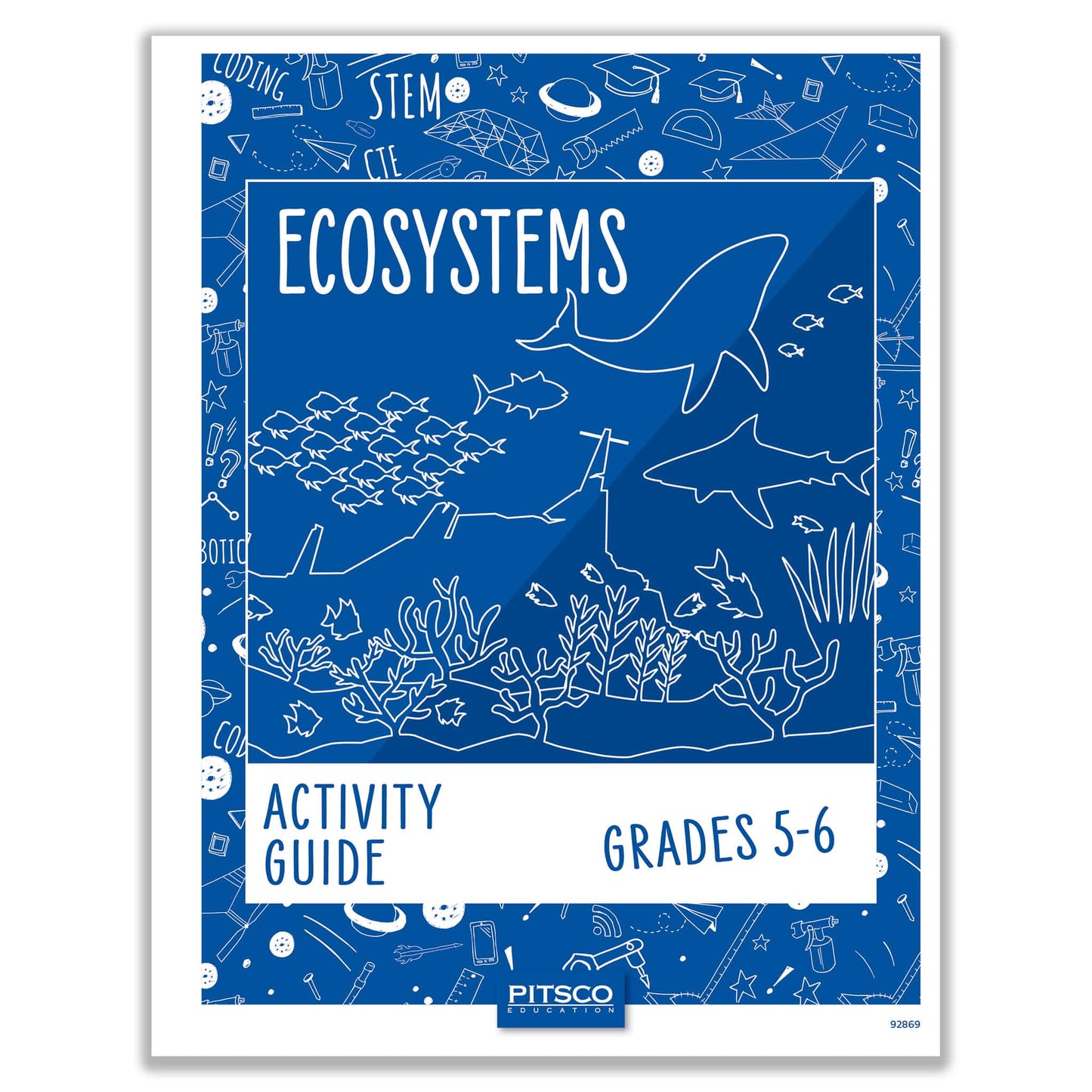
Ecosystems Grades 5-6 Activity Bundle

Regular price $110.00
Regular price $0.00 Sale price $110.00
Grades 5-6

Ecosystems Grades 5-6 Activity Bundle Brings Biodiversity, Decomposition, and Conservation into Students' Hands

Regular price $110.00
Regular price $0.00 Sale price $110.00
Shipping calculated at checkout.

⚠️ Clearance Item - Final Sale

All clearance sales are final. No returns, refunds, or exchanges.

SKU: SKU:92885

Students play food chain games, analyze organism data, investigate invasive species impact, explore decomposition cycles, and build bird feeders for their local community. Three hands-on activities connect ecological science to data analysis, systems thinking, and real-world conservation for ten to twelve students.

Out of Stock - Please allow 2-4 weeks for shipping.

Students Served: 10-12
Zero Prep Required
Zero Prep Required
Cross-Curricular STEM
NGSS + CCSS Aligned
NGSS + CCSS Aligned
Real-World Connections
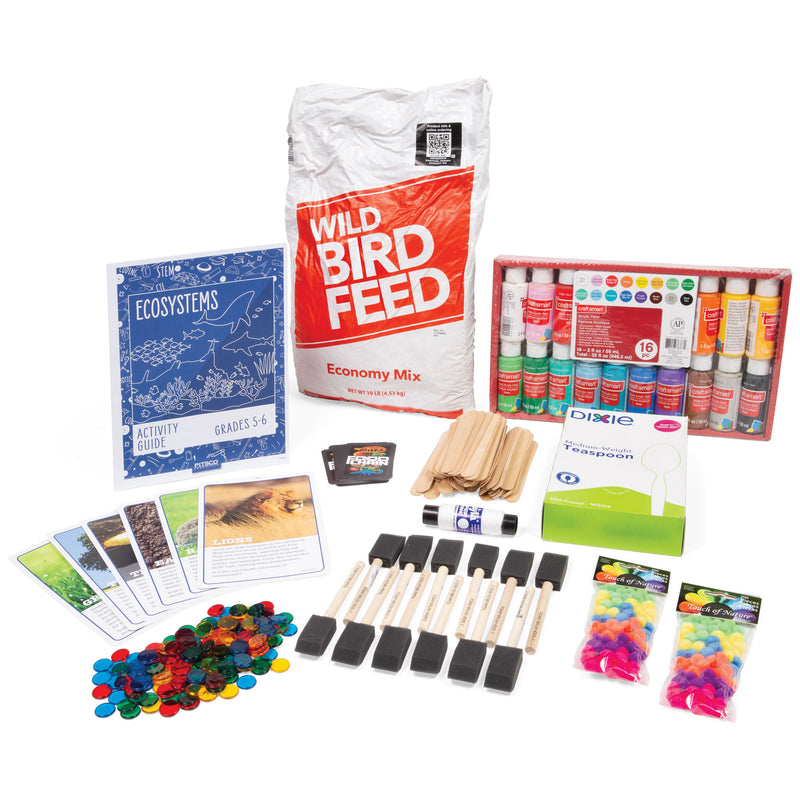
WHAT'S INCLUDED
  • Activity guide
  • Food Chain game cards
  • Organism fact cards
  • Jumbo craft sticks
  • Spoons
  • Pom-poms
  • Game tokens
  • String
  • Acrylic paint
  • Foam brushes
  • Birdseed
SPECIFICATIONS & SAFETY
  • Students Served: 10-12
  • Tools and Materials Required: Liquid and hot glue
View full details
Ecosystems Grades 5-6 Activity Bundle
Ecosystems Grades 5-6 Activity Bundle

Regular price $110.00
Regular price $0.00 Sale price $110.00

Frequently Bought Together

1
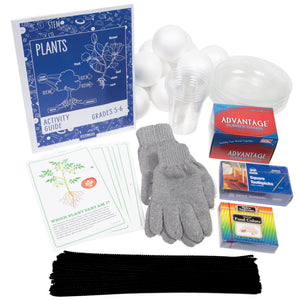
Plants Grades 5-6 Activity Bundle
+
2
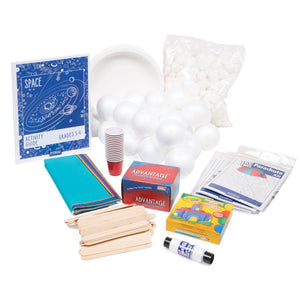
Space Grades 5-6 Activity Bundle
+
3
Human Impacts Grades 5-6 Activity Bundle

Total: $343.00 (3 items)
Ecosystems Grades 5-6 Activity Bundle

From Food Chains to Bird Feeders

The Ecosystems Activity Bundle makes ecological science tangible. Students explore how organisms interact, how ecosystems change when species are added or removed, and how they can contribute to local conservation through real engineering projects.
Food Chain Games

Food Chain Games

Students use custom game cards to model predator-prey relationships, energy transfer between trophic levels, and what happens when a species is removed from an ecosystem, building systems thinking through competitive play.

Biodiversity and Invasive Species

Biodiversity and Invasive Species

Using organism fact cards and data analysis, students investigate how invasive species disrupt native ecosystems, exploring real-world case studies that connect science to environmental issues.

Decomposition Exploration

Decomposition Exploration

Students examine how organic matter breaks down and cycles nutrients through ecosystems, understanding the role of decomposers in maintaining ecological balance.

Bird Feeder Engineering

Bird Feeder Engineering

Students design and build bird feeders from craft sticks, paint them, fill them with birdseed, and deploy them in their community, connecting classroom ecology to local conservation action.

What Students Will Do

Three activities build ecological literacy from food web concepts through decomposition science to community-based conservation engineering.
  • Play food chain games that model predator-prey relationships
  • Analyze organism data to investigate biodiversity patterns
  • Study how invasive species disrupt native ecosystems
  • Explore decomposition cycles and nutrient recycling
  • Design and build bird feeders from craft sticks
  • Deploy bird feeders in the local community for real conservation impact

Compare Similar Products

Feature Current Product
Ecosystems Grades 5-6 Activity Bundle
Plants Grades 5-6 Activity Bundle Human Impacts Grades 5-6 Activity Bundle
Price $110.00 $110.00 $109.00
Science Domain Life Science—EcologyLife Science—Botany Life Science—Environment
Activities 33 4
Students Served 10-1210-12 10-12
Community Connection
Game-Based Learning
Engineering Design
Data Analysis
Grade Level 5-65-6 5-6
View Details View Details

Three Activities from Ecosystem Concepts to Community Action

Activity 1: Food Chains and Biodiversity—Students play the Food Chain game using custom cards that represent producers, consumers, and decomposers. They model energy transfer, explore what happens when species are removed, and analyze organism fact cards to investigate biodiversity patterns and invasive species impact.

Activity 2: Decomposition Cycles—Students explore how organic matter breaks down, identifying the role of decomposers in nutrient cycling. They examine how decomposition maintains ecosystem health and connects to the food web concepts from Activity 1.

Activity 3: Bird Feeder Engineering—Students design and build bird feeders using craft sticks, paint, and birdseed. They apply what they have learned about local ecosystems to create feeders suited to their community, then deploy them outdoors for real conservation impact.

Ecological Thinking That Connects to the Real World

The Ecosystems Activity Bundle builds the systems thinking skills that NGSS emphasizes for upper elementary science. Students learn to see organisms not in isolation but as parts of interconnected webs—producers feeding consumers, decomposers recycling nutrients, and invasive species disrupting balance.

Game-based learning in Activity 1 makes abstract food web concepts competitive and memorable. Data analysis of organism fact cards develops scientific reasoning. The bird feeder project connects classroom learning to tangible community impact, teaching students that science leads to action.

Why Teachers Love Ecosystems Grades 5-6 Activity Bundle

Community Conservation Project

Community Conservation Project

The bird feeder activity takes learning beyond the classroom, giving students a tangible way to contribute to their local ecosystem.

Game-Based Ecology

Game-Based Ecology

Food chain game cards make predator-prey relationships and energy transfer competitive and memorable, not just another worksheet.

Systems Thinking Development

Systems Thinking Development

Students learn to see ecosystems as interconnected webs, understanding how changes to one species affect the entire system.

Real-World Data Analysis

Real-World Data Analysis

Organism fact cards give students authentic data to analyze, building the scientific reasoning skills that transfer to every STEM subject.

Serves 10-12 Students

Serves 10-12 Students

One bundle covers a full small group with all specialized materials, making planning and budgeting straightforward.

Minimal Teacher Supplies Needed

Minimal Teacher Supplies Needed

Only liquid glue and hot glue are required beyond what ships in the box, making this one of the easiest bundles to prepare.

Flexible Purchasing Options

Pricing and volume discounts are built in—choose the path that fits your purchasing process.

Buy Online

Best if you know what you need and can buy online.

Ready to purchase now? Add this to your cart for fast, easy checkout.

Request a Quote

Need a quote for approval or purchase order processing?

Request a quote or connect with an Education Advisor before purchasing.

Request a Quote

Get Expert Guidance

Exploring options or planning a larger implementation?

Our Education Advisors can help with product selection, curriculum, and professional learning.

Book a Meeting

Frequently Asked Questions

What ecology concepts does this bundle cover?

Students explore food chains, predator-prey relationships, energy transfer, biodiversity, invasive species, decomposition cycles, and local conservation through bird feeder engineering.

Do the bird feeders actually get used outside?

Yes. The activity is designed so students build, paint, and fill bird feeders with the included birdseed, then place them outdoors. It connects classroom ecology to real community action.

What additional supplies do I need?

Just liquid glue and hot glue. All game cards, organism cards, craft materials, paint, brushes, and birdseed are included in the bundle.

How many class sessions does this fill?

Three activities, each designed for one to two sessions. The bird feeder project may extend to a third session if you include outdoor observation time.

Does this align with NGSS standards?

Yes. The bundle addresses life science standards for Grades 5-6, including ecosystems, matter and energy in organisms, and interdependent relationships in ecosystems.

How does this pair with other Grades 5-6 bundles?

Ecosystems pairs naturally with the Plants bundle (both life science) and the Human Impacts bundle (environmental focus). Together they build a comprehensive life science unit.