Plants Grades 5-6 Activity Bundle

Regular price $110.00
Regular price $0.00 Sale price $110.00
Grades 5-6

Plants Grades 5-6 Activity Bundle Grows Real Science Understanding from Roots to Seed Dispersal

Regular price $110.00
Regular price $0.00 Sale price $110.00
Shipping calculated at checkout.

⚠️ Clearance Item - Final Sale

All clearance sales are final. No returns, refunds, or exchanges.

SKU: SKU:92888

Students learn plant anatomy by building 3-D models, conduct a photosynthesis experiment with celery and food coloring, and investigate how seeds travel through different dispersal mechanisms. Three hands-on activities bring life science off the textbook page and into students' hands for ten to twelve learners.

Out of Stock - Please allow 2-4 weeks for shipping.

Students Served: 10-12
Zero Prep Required
Zero Prep Required
Five Ready-Made Lessons
NGSS + CCSS Aligned
NGSS + CCSS Aligned
Career Exploration Built In
WHAT'S INCLUDED
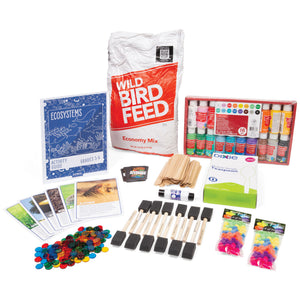
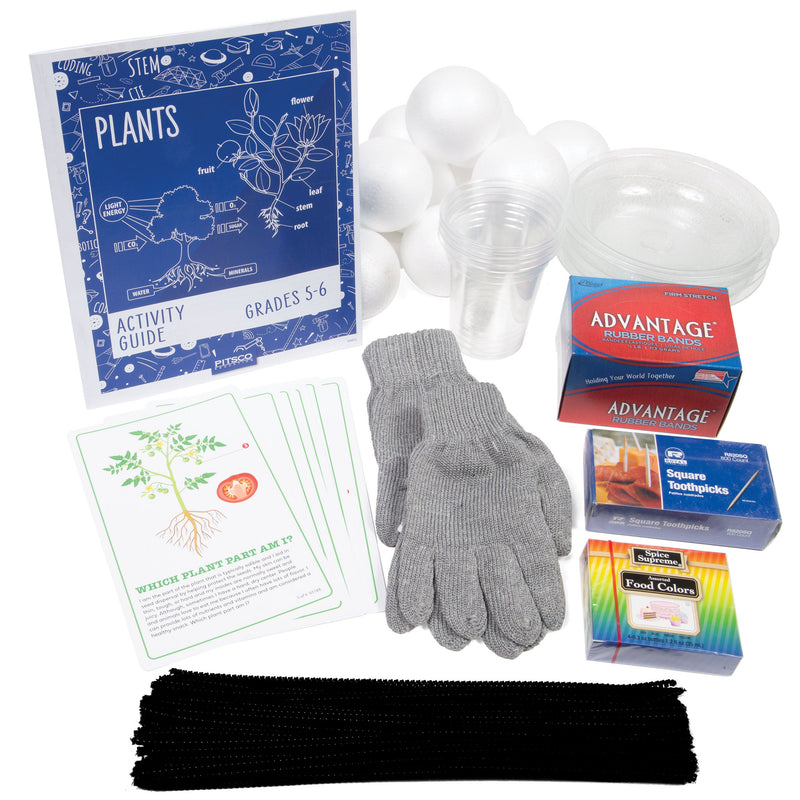
  • Activity guide
  • Plant Part cards
  • Cups
  • Food coloring
  • Bowls
  • Styrofoam balls
  • Wool gloves
  • Toothpicks
  • Pipe cleaners
  • Rubber bands
SPECIFICATIONS & SAFETY
  • Students Served: 10-12
  • Tools and Materials Required: Clipboard, celery, green leaves, water, liquid glue, tape, scissors
View full details
Plants Grades 5-6 Activity Bundle
Plants Grades 5-6 Activity Bundle

Regular price $110.00
Regular price $0.00 Sale price $110.00

Frequently Bought Together

1
Ecosystems Grades 5-6 Activity Bundle
+
2
Human Impacts Grades 5-6 Activity Bundle
+
3
Space Grades 5-6 Activity Bundle

Total: $343.00 (3 items)
Plants Grades 5-6 Activity Bundle

From Roots to Seeds in Three Activities

The Plants Activity Bundle makes botany tangible. Students explore plant structure through models, observe photosynthesis through a real experiment, and investigate seed dispersal mechanisms—building life science understanding they can see and touch.
Plant Anatomy Modeling

Plant Anatomy Modeling

Students use Plant Part cards, Styrofoam balls, pipe cleaners, and toothpicks to build 3-D models of plant structures, learning the function of roots, stems, leaves, and flowers through hands-on construction.

Photosynthesis Experiment

Photosynthesis Experiment

Students place celery stalks in colored water and observe how the plant draws water upward through its vascular system, providing visible evidence of how plants transport water and nutrients.

Seed Dispersal Investigation

Seed Dispersal Investigation

Students explore how seeds travel through wind, water, animal fur (modeled with wool gloves), and other mechanisms, understanding how plant reproduction depends on dispersal strategies.

Observation and Data Recording

Observation and Data Recording

Every activity asks students to observe, record, and describe what they see, building the scientific documentation skills that strengthen performance across all science investigations.

What Students Will Do

Three activities build botanical understanding from plant structure through water transport to seed dispersal, covering the full plant life cycle.
  • Build 3-D plant models using Styrofoam, pipe cleaners, and toothpicks
  • Identify and label plant parts using reference cards
  • Conduct a celery-and-food-coloring photosynthesis experiment
  • Observe water transport through plant vascular systems
  • Investigate seed dispersal by wind, water, and animal interaction
  • Record observations and describe scientific findings

Compare Similar Products

Feature Current Product
Plants Grades 5-6 Activity Bundle
Ecology Grades 3-4 Activity Bundle Chemical Reactions Grades 5-6 Activity Bundle
Price $110.00 $120.00 $49.75
Science Domain Life Science—BotanyLife Science—Ecology Physical Science—Chemistry
Activities 33 3
Students Served 10-1210-12 10-12
3-D Modeling
Live Experiment
Game-Based Learning
Data Recording
Grade Level 5-65-6 5-6
View Details View Details

Three Activities That Build Botanical Understanding

Activity 1: Plant Parts and Structure—Students study Plant Part cards to learn the function of roots, stems, leaves, and flowers. Then they use Styrofoam balls, pipe cleaners, toothpicks, and other materials to build 3-D models that demonstrate how each part contributes to the whole plant.

Activity 2: Photosynthesis in Action—Students place celery stalks in cups of colored water and observe over time how the plant draws liquid upward through its vascular system. The food coloring makes the water transport visible, giving students direct evidence of how plants move water and nutrients from roots to leaves.

Activity 3: Seed Dispersal Mechanisms—Students investigate how seeds travel using wind, water, and animal interaction. Wool gloves simulate animal fur to show how seeds hitch rides, while other materials model wind and water dispersal. Students categorize seeds by their dispersal strategy.

Life Science from Structure to Reproduction

The Plants Activity Bundle addresses NGSS life science standards for Grades 5-6, building understanding from the cellular level (plant structure and function) through organism-level processes (photosynthesis and water transport) to species-level survival strategies (seed dispersal).

3-D modeling develops spatial reasoning and helps students remember plant anatomy better than diagrams alone. The celery experiment provides real evidence of vascular transport that students can observe over time. Seed dispersal investigation connects plant reproduction to ecology, showing students how individual plants contribute to ecosystem distribution.

Why Teachers Love Plants Grades 5-6 Activity Bundle

Real Photosynthesis Experiment

Real Photosynthesis Experiment

Students watch colored water travel through celery in real time, providing visible evidence of plant vascular transport that no textbook diagram can match.

3-D Model Building

3-D Model Building

Physical plant models help students understand structure and function far better than flat diagrams, and the building process itself reinforces learning.

Full Plant Life Cycle

Full Plant Life Cycle

Three activities cover structure, water transport, and seed dispersal, giving students a complete picture of how plants grow, function, and reproduce.

Observation Skills Development

Observation Skills Development

Every activity requires students to observe, record, and describe, building the scientific documentation habits that strengthen all future investigations.

Serves 10-12 Students

Serves 10-12 Students

One bundle includes all specialized materials for a full small group.

Pairs with Life Science Bundles

Pairs with Life Science Bundles

Combine with Ecosystems and Human Impacts bundles for a comprehensive life science unit that covers botany, ecology, and environmental science.

Flexible Purchasing Options

Pricing and volume discounts are built in—choose the path that fits your purchasing process.

Buy Online

Best if you know what you need and can buy online.

Ready to purchase now? Add this to your cart for fast, easy checkout.

Request a Quote

Need a quote for approval or purchase order processing?

Request a quote or connect with an Education Advisor before purchasing.

Request a Quote

Get Expert Guidance

Exploring options or planning a larger implementation?

Our Education Advisors can help with product selection, curriculum, and professional learning.

Book a Meeting

Frequently Asked Questions

What plant science concepts does this bundle cover?

Students learn plant anatomy (roots, stems, leaves, flowers), observe vascular water transport through a celery experiment, and investigate seed dispersal mechanisms including wind, water, and animal interaction.

Do I need to provide live plants?

Yes. Teachers supply celery stalks and green leaves for the experiments. The bundle provides everything else—Plant Part cards, Styrofoam balls, pipe cleaners, food coloring, wool gloves, and all other materials.

How long does the celery experiment take?

The setup takes about ten minutes. Students observe color changes over several hours, making this ideal for a morning setup with afternoon observations or a multi-day observation journal.

Does this align with NGSS standards?

Yes. The bundle addresses life science standards for Grades 5-6, including structure and function, plant processes, and how organisms are adapted to their environment.

Can this pair with the Ecosystems bundle?

Absolutely. Plants and Ecosystems together cover botany and ecology, and seed dispersal connects directly to ecosystem distribution topics. Add Human Impacts for a full life science unit.

How many class sessions does this fill?

Three activities, each designed for one to two sessions. The celery experiment adds observation time between sessions, which works well as a multi-day science journal activity.