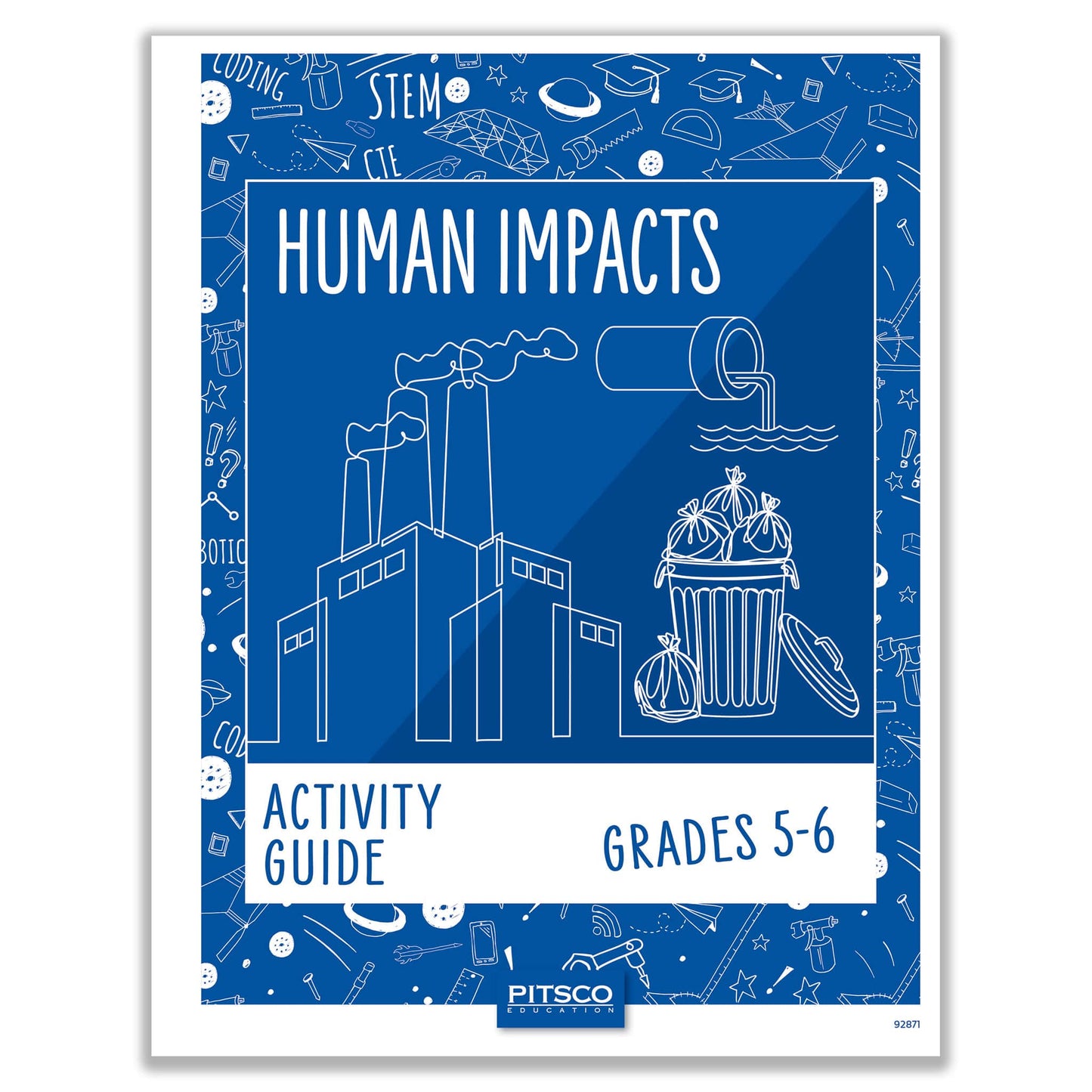
Human Impacts Grades 5-6 Activity Bundle

Regular price $109.00
Regular price $0.00 Sale price $109.00
Grades 5-6

Human Impacts Grades 5-6 Activity Bundle Challenges Students to Filter Water and Rethink Waste

Regular price $109.00
Regular price $0.00 Sale price $109.00
Shipping calculated at checkout.

⚠️ Clearance Item - Final Sale

All clearance sales are final. No returns, refunds, or exchanges.

SKU: SKU:92887

Students investigate real water pollutants, design and build working filtration devices, practice fraction multiplication through environmental data, and engineer devices from recycled materials that benefit the environment. Hands-on sustainability science for ten to twelve learners.

Out of Stock - Please allow 2-4 weeks for shipping.

Students Served: 10-12 students
Hands-On Environmental Science
Engineering Design Challenge
10-12 Students Served
Sustainability Focus
WHAT'S INCLUDED
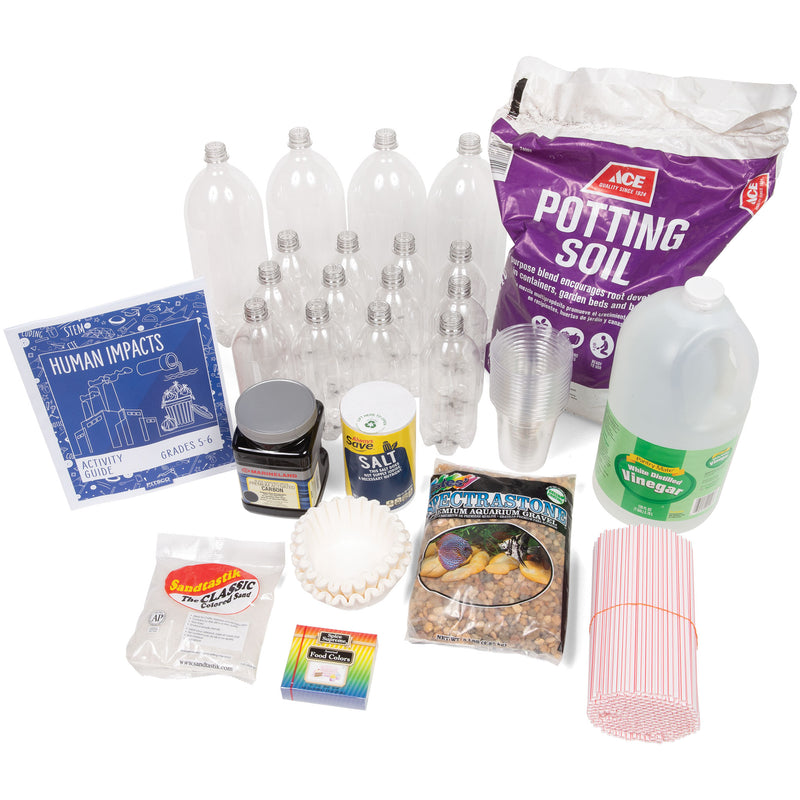
  • Activity guide
  • Plastic cups
  • Food coloring
  • Salt
  • Vinegar
  • Two sizes of plastic bottles
  • Coffee filters
  • Sand
  • Gravel
  • Activated charcoal
  • Soil
  • Straws
SPECIFICATIONS & SAFETY
  • Students Served: 10-12
  • Tools and Materials Required: Water, scissors, tape, liquid glue, various recycled materials
View full details
Human Impacts Grades 5-6 Activity Bundle
Human Impacts Grades 5-6 Activity Bundle

Regular price $109.00
Regular price $0.00 Sale price $109.00

Frequently Bought Together

1
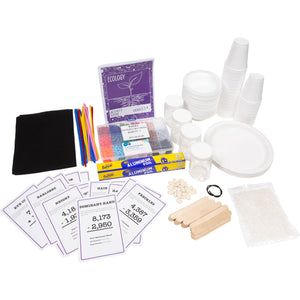
Ecology Grades 3-4 Activity Bundle
+
2
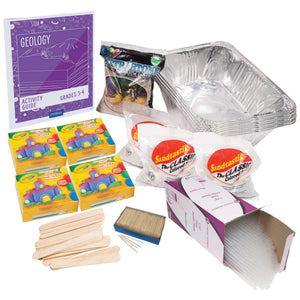
Geology Grades 3-4 Activity Bundle
+
3
Natural Disasters Grades 3-4 Activity Bundle

Total: $420.00 (3 items)
Human Impacts Grades 5-6 Activity Bundle

Students Solve Real Environmental Problems

Sand, gravel, activated charcoal, and coffee filters become a working water filtration system. Students connect environmental science to mathematics and engineering design through challenges grounded in real sustainability issues.
Water Pollutant Investigation

Water Pollutant Investigation

Students explore real-world water pollutants using food coloring, salt, vinegar, and soil to model contamination, building understanding of how human activities affect water quality

Water Filtration Design

Water Filtration Design

Using sand, gravel, activated charcoal, coffee filters, and plastic bottles, students design and build working filtration devices that remove visible contaminants from polluted water samples

Fraction Multiplication With Environmental Data

Fraction Multiplication With Environmental Data

Students practice fraction multiplication through real environmental scenarios, connecting math skills to sustainability concepts in a meaningful context

Recycled Materials Engineering

Recycled Materials Engineering

The culminating challenge: students design and build devices from recycled materials that benefit the environment, applying engineering design to sustainability goals

What Students Will Do

Students investigate environmental problems and engineer solutions using real materials, building science and math skills that connect to global sustainability.
  • Investigate how human activities pollute water systems
  • Design and build working water filtration devices
  • Practice fraction multiplication with environmental data
  • Engineer devices from recycled materials
  • Test filtration effectiveness and iterate on designs
  • Connect mathematics to real-world environmental science

Compare Similar Products

Feature Current Product
Human Impacts Grades 5-6 Activity Bundle
Ecology Grades 3-4 Activity Bundle Geology Grades 3-4 Activity Bundle
Price $109.00 $120.00 $135.00
Grade Level Grades 5-6Grades 3-4 Grades 3-4
Students Served 10-1210-12 10-12
Subject Area Environmental ScienceLife Science Earth Science
Activities Included 44 4
Engineering Challenge Water filtration + recycled deviceSun-protecting habitat Erosion prevention
Devices Required NoneNone None
Best For Pollution, filtration, and sustainabilityLife cycles, genetics, and habitats Rocks, weathering, and erosion
View Details View Details

From Pollution to Purification

Activity 1: Water Pollutant Investigation—Students model water contamination using food coloring, salt, vinegar, and soil. They observe how different pollutants affect water and discuss real-world sources of contamination.

Activity 2: Filtration Device Design—Using sand, gravel, activated charcoal, coffee filters, and plastic bottles, teams design and build working filtration systems. Students test their devices against polluted water samples and measure effectiveness.

Activity 3: Environmental Math—Students practice fraction multiplication using real environmental data sets, connecting math operations to sustainability contexts.

Activity 4: Recycled Materials Challenge—Teams engineer devices from recycled materials that benefit the environment, applying the design process to sustainability.

Environmental Science Meets Engineering

The Human Impacts Grades 5-6 Activity Bundle connects environmental science to mathematics, engineering design, and sustainability thinking. Students develop critical awareness of human environmental impact alongside practical problem-solving skills.

Science—Water quality, pollution, filtration, environmental systems

Technology—Testing methods, data collection, measurement

Engineering—Filtration design, recycled material engineering, prototyping

Math—Fraction multiplication, data interpretation, measurement

Why Teachers Love Human Impacts Grades 5-6 Activity Bundle

Working Filtration Systems

Working Filtration Systems

Students build devices that actually filter water, making abstract environmental concepts visible and measurable.

Sustainability Skills

Sustainability Skills

Activities connect to real-world environmental issues students will encounter as citizens and future professionals.

Math in Context

Math in Context

Fraction multiplication practiced through environmental data sets, giving purpose to math skills students are developing.

Minimal Prep Time

Minimal Prep Time

Activity guide and specialized materials included. Add water and recycled materials to begin.

Collaborative Problem Solving

Collaborative Problem Solving

Team-based activities build communication skills alongside science and engineering.

Affordable Environmental Science

Affordable Environmental Science

Real sustainability engineering that fits any classroom budget and serves ten to twelve students per bundle.

Flexible Purchasing Options

Pricing and volume discounts are built in—choose the path that fits your purchasing process.

Buy Online

Best if you know what you need and can buy online.

Ready to purchase now? Add this to your cart for fast, easy checkout.

Request a Quote

Need a quote for approval or purchase order processing?

Request a quote or connect with an Education Advisor before purchasing.

Request a Quote

Get Expert Guidance

Exploring options or planning a larger implementation?

Our Education Advisors can help with product selection, curriculum, and professional learning.

Book a Meeting

Frequently Asked Questions

How many students does this bundle serve?

The Human Impacts Grades 5-6 Activity Bundle includes materials for ten to twelve students working collaboratively across four activities.

Do students actually filter water?

Yes. Students build working filtration devices using sand, gravel, activated charcoal, and coffee filters that visibly remove contaminants from polluted water samples.

What grade level is this designed for?

This bundle is designed for Grades 5-6, while most other Activity Bundles in this series target Grades 3-4.

What additional materials do I need?

Water, scissors, tape, liquid glue, and various recycled materials. The recycled materials can be collected by students as part of the learning experience.

Does this bundle require any technology?

No. All activities use physical materials. No devices or Internet access needed.

What science bundles pair well with this one?

The Ecology (92880) and Geology (92879) bundles complement environmental themes, though they target Grades 3-4 rather than 5-6.