Ecology Grades 3-4 Activity Bundle

Regular price $120.00
Regular price $0.00 Sale price $120.00
Grades 3-4

Ecology Grades 3-4 Activity Bundle Lets Students Grow Plants, Study Genes, and Build Habitats

Regular price $120.00
Regular price $0.00 Sale price $120.00
Shipping calculated at checkout.

⚠️ Clearance Item - Final Sale

All clearance sales are final. No returns, refunds, or exchanges.

SKU: SKU:92880

Students compare life cycles, explore inherited traits, design sun-protecting habitats, and develop observation skills through hands-on experiments with lima beans, color-changing beads, and craft materials. Life science that grows right on their desks for ten to twelve learners.

Out of Stock - Please allow 2-4 weeks for shipping.

Students Served: 10-12 students
Hands-On Life Science
Engineering Design Challenge
10-12 Students Served
Living Experiments
Living Experiments
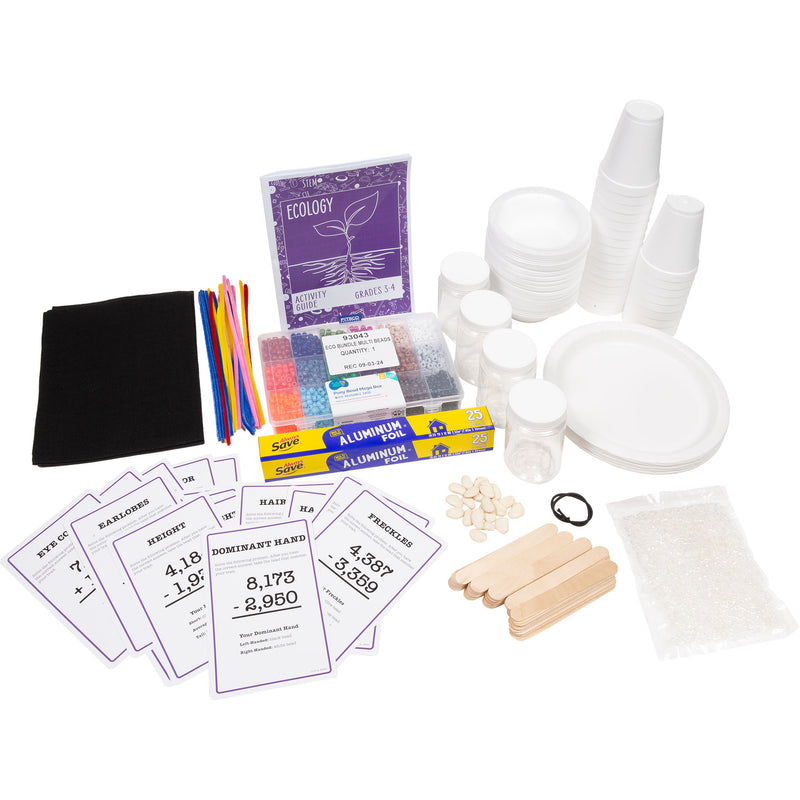
WHAT'S INCLUDED
  • Activity guide
  • Math cards
  • Jars (16 oz)
  • Lima beans
  • Colored beads and color-changing beads
  • Elastic string
  • Pipe cleaners
  • Jumbo craft sticks
  • Aluminum foil
  • Styrofoam cups and bowls
  • Paper plates
  • Felt
SPECIFICATIONS & SAFETY
  • Students Served: 10-12
  • Tools and Materials Required: Highlighters, coloring supplies, paper towels, water, clipboards, small containers to hold the beads for students (optional)
View full details
Ecology Grades 3-4 Activity Bundle
Ecology Grades 3-4 Activity Bundle

Regular price $120.00
Regular price $0.00 Sale price $120.00

Frequently Bought Together

1
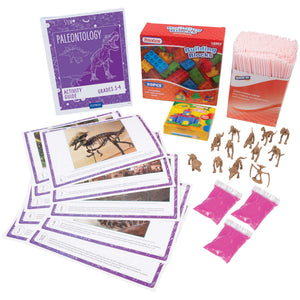
Paleontology Grades 3-4 Activity Bundle
+
2
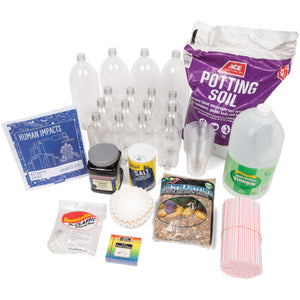
Human Impacts Grades 5-6 Activity Bundle
+
3
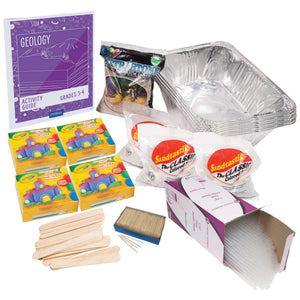
Geology Grades 3-4 Activity Bundle

Total: $359.00 (3 items)
Ecology Grades 3-4 Activity Bundle

Watch It Grow, Test It, Build It

Lima beans, color-changing beads, and craft materials turn abstract ecology concepts into experiences students observe, measure, and design around. Real plants grow, traits are inherited, and habitats are engineered.
Life Cycle Comparison

Life Cycle Comparison

Students grow lima beans in jars, observing and documenting germination, growth stages, and development over time while comparing plant life cycles to animal life cycles

Inherited Traits Exploration

Inherited Traits Exploration

Using colored beads and color-changing beads, students model how traits are passed from parent to offspring, building intuition for genetics through hands-on simulation

Sun-Protecting Habitat Design

Sun-Protecting Habitat Design

The engineering challenge: students design and build habitats from craft sticks, aluminum foil, felt, and cups that protect organisms from sun exposure, testing their designs with color-changing beads as UV indicators

Scientific Observation Skills

Scientific Observation Skills

Throughout all activities, students practice systematic observation, data recording, and evidence-based reasoning that form the foundation of scientific inquiry

What Students Will Do

Students explore life science concepts through living experiments and hands-on models, building observation and design skills alongside biology understanding.
  • Grow lima beans and observe plant life cycles
  • Model inherited traits using colored bead simulations
  • Design sun-protecting habitats with UV-indicating beads
  • Compare plant and animal life cycles
  • Practice systematic observation and data recording
  • Apply engineering design to habitat challenges

Compare Similar Products

Feature Current Product
Ecology Grades 3-4 Activity Bundle
Paleontology Grades 3-4 Activity Bundle Human Impacts Grades 5-6 Activity Bundle
Price $120.00 $115.00 $109.00
Grade Level Grades 3-4Grades 3-4 Grades 5-6
Students Served 10-1210-12 10-12
Subject Area Life ScienceEarth Science Environmental Science
Activities Included 44 4
Engineering Challenge 4 Sun-protecting habitatAdaptive survival device Water filtration
Living Experiments
Best For Life cycles, genetics, and habitatsFossils, etymology, and adaptive design Pollution, filtration, and sustainability
View Details View Details

From Seeds to Engineered Habitats

Activity 1: Plant Life Cycles—Students plant lima beans in jars, observe germination and growth over time, and document each stage. They compare plant development to animal life cycles.

Activity 2: Inherited Traits—Using colored beads and elastic string, students model how traits pass from parent to offspring. Color-changing beads add a visual element to genetic variation.

Activity 3: Scientific Observation—Students practice systematic observation across their growing plants and bead models, recording data and drawing evidence-based conclusions.

Activity 4: Habitat Engineering—Teams design and build sun-protecting habitats from craft sticks, aluminum foil, felt, and cups. Color-changing beads serve as UV indicators to test habitat effectiveness.

Life Science Through Inquiry and Design

The Ecology Grades 3-4 Activity Bundle connects life science to math, engineering, and scientific practices. Students develop observation, modeling, and design skills through living experiments and hands-on challenges.

Science—Life cycles, inherited traits, habitats, adaptations

Technology—Observation tools, data recording, measurement

Engineering—Habitat design, material selection, prototyping

Math—Data collection, comparison, math card activities

Why Teachers Love Ecology Grades 3-4 Activity Bundle

Living Experiments

Living Experiments

Students grow actual plants, making life cycle concepts tangible and building the patience and observation habits real science requires.

Genetics Made Visual

Genetics Made Visual

Color-changing beads and colored bead models make inherited traits visible and concrete for young learners.

UV-Testing Engineering

UV-Testing Engineering

The sun-protecting habitat challenge uses color-changing beads as UV indicators, giving students measurable feedback on their designs.

Minimal Prep Time

Minimal Prep Time

Activity guide and specialized materials included. Add commonly available classroom supplies to begin.

Scientific Practices

Scientific Practices

Every activity reinforces observation, data recording, and evidence-based reasoning.

Affordable Life Science

Affordable Life Science

Hands-on ecology that fits any elementary budget and serves ten to twelve students per bundle.

Flexible Purchasing Options

Pricing and volume discounts are built in—choose the path that fits your purchasing process.

Buy Online

Best if you know what you need and can buy online.

Ready to purchase now? Add this to your cart for fast, easy checkout.

Request a Quote

Need a quote for approval or purchase order processing?

Request a quote or connect with an Education Advisor before purchasing.

Request a Quote

Get Expert Guidance

Exploring options or planning a larger implementation?

Our Education Advisors can help with product selection, curriculum, and professional learning.

Book a Meeting

Frequently Asked Questions

How many students does this bundle serve?

The Ecology Grades 3-4 Activity Bundle includes materials for ten to twelve students working collaboratively across four activities.

Do students grow real plants?

Yes. Lima beans and jars are included for planting. Students observe germination and growth over approximately one to two weeks.

What are the color-changing beads for?

Color-changing beads react to UV light, serving as indicators in the sun-protecting habitat engineering challenge. Students can measure how well their habitat designs block UV exposure.

What additional materials do I need?

Highlighters, coloring supplies, paper towels, water, and clipboards. Small containers for beads are optional.

How long does the plant growth activity take?

Lima beans typically germinate within a few days and show observable growth stages over one to two weeks. Other activities can run concurrently.

What life science bundles pair well with this one?

The Paleontology bundle (92876) covers fossils and adaptation, and the Human Impacts bundle (92887) covers environmental sustainability—both complement ecology themes.