Coding Grades 3-4 Activity Bundle

Regular price $145.00
Regular price $0.00 Sale price $145.00
Grades 3-4

Coding Grades 3-4 Activity Bundle Teaches Programming Logic Through Games and Hands-On Challenges

Regular price $145.00
Regular price $0.00 Sale price $145.00
Shipping calculated at checkout.

⚠️ Clearance Item - Final Sale

All clearance sales are final. No returns, refunds, or exchanges.

SKU: SKU:92877

Students explore coding logic, loops, and conditional statements without ever touching a screen. Through an Internet simulation activity, a multiplication sequencing board game, technology accessibility exploration, and presentation feedback practice, ten to twelve learners build computational thinking skills they can see and touch.

In stock

Students Served: 10-12 students
Five 45-Minute Lessons
No Devices Required
No Devices Required
NGSS + CCSS Aligned
NGSS + CCSS Aligned
Cross-Curricular Learning
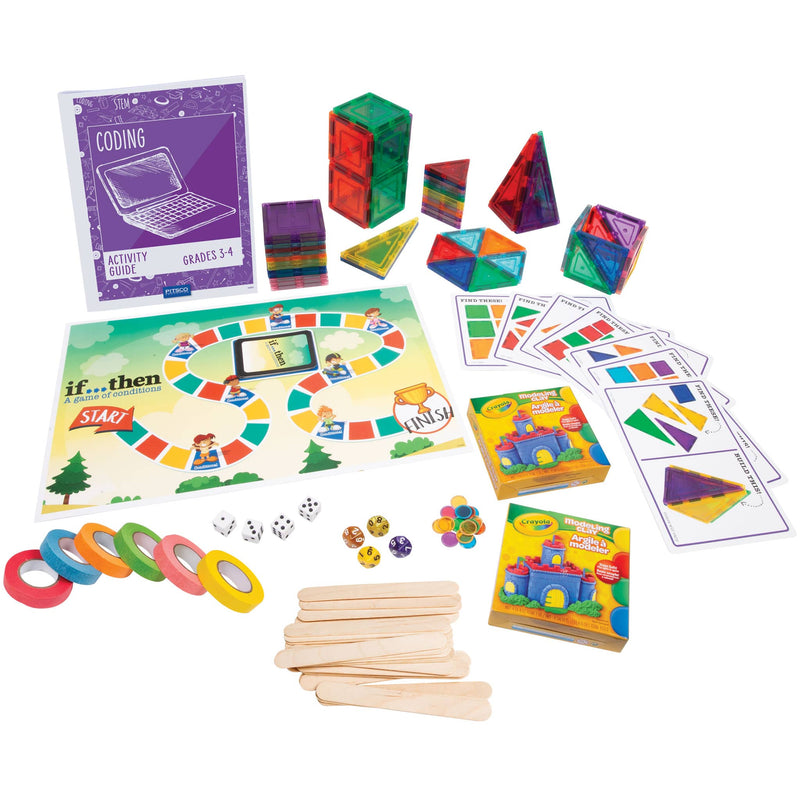
WHAT'S INCLUDED
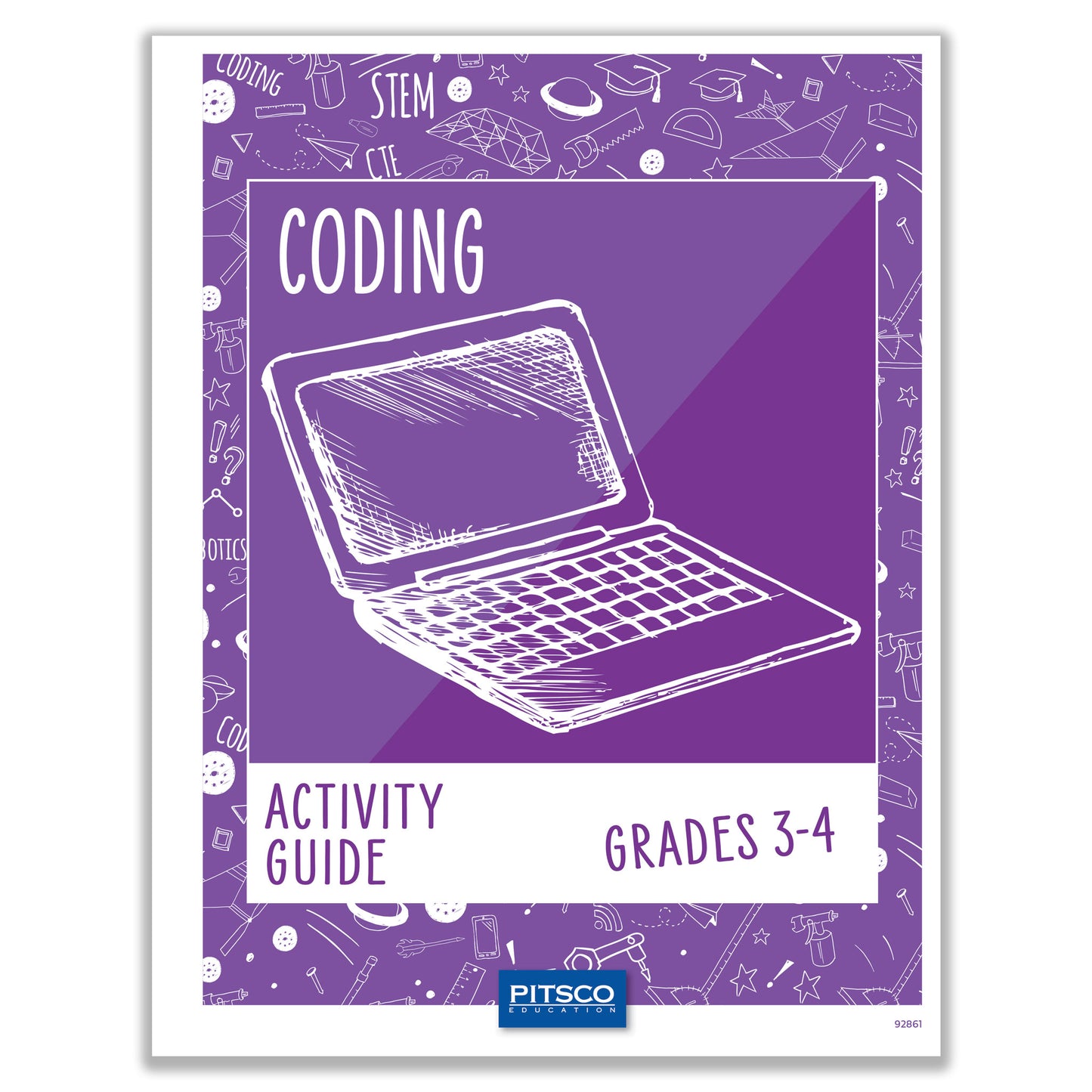
  • Activity guide
  • Magnetic building tiles
  • Magnet card set
  • Multicolor masking tape
  • Jumbo craft sticks
  • Gameboard and cards
  • Game tokens
  • 10-sided dice
  • Six-sided dice
  • Modeling clay
SPECIFICATIONS & SAFETY
  • Students Served: 10-12
  • Tools and Materials Required: Art supplies and paper
  • This bundle is aligned to CSTA standards.
View full details
Coding Grades 3-4 Activity Bundle
Coding Grades 3-4 Activity Bundle

Regular price $145.00
Regular price $0.00 Sale price $145.00

Frequently Bought Together

1
Paleontology Grades 3-4 Activity Bundle
+
2
Sound Waves Grades 3-4 Activity Bundle
+
3
Natural Disasters Grades 3-4 Activity Bundle

Total: $390.00 (3 items)
Coding Grades 3-4 Activity Bundle

Computational Thinking Students Can Touch

Magnetic tiles, board games, and craft materials turn abstract coding concepts into physical experiences. Students build loops with their hands, debug sequences on a gameboard, and collaborate on logic challenges that make computer science tangible.
Internet Simulation Activity

Internet Simulation Activity

Students model how information travels across networks using physical materials, building intuition for data flow, routing, and digital communication before they ever open a browser

Multiplication Sequencing Board Game

Multiplication Sequencing Board Game

A gameboard with cards, tokens, and dice turns coding sequences and loops into a competitive math game that reinforces both computational thinking and multiplication fluency

Technology Accessibility Exploration

Technology Accessibility Exploration

Students investigate how technology can be designed for all users, connecting coding concepts to real-world inclusive design and digital citizenship

Presentation Feedback Practice

Presentation Feedback Practice

Students develop communication skills by presenting their coding solutions and providing structured peer feedback, building the collaboration habits that real developers use daily

What Students Will Do

Through four distinct activities, students build a foundation in computational thinking that transfers directly to screen-based coding when they are ready.
  • Model Internet data flow using physical simulations
  • Apply loops and sequences through a competitive board game
  • Explore inclusive design and technology accessibility
  • Practice structured presentation and peer feedback
  • Connect multiplication fluency to coding logic
  • Collaborate in teams to solve unplugged coding challenges

Compare Similar Products

Feature Current Product
Coding Grades 3-4 Activity Bundle
Sound Waves Grades 3-4 Activity Bundle Ecology Grades 3-4 Activity Bundle
Price $145.00 $110.00 $120.00
Grade Level Grades 3-4Grades 3-4 Grades 3-4
Students Served 10-1210-12 10-12
Subject Area Computer SciencePhysical Science Life Science
Activities Included 44 4
Standards Alignment CSTANGSS NGSS
Devices Required NoneNone None
Best For Computational thinking without screensSound, pitch, and acoustic engineering Life cycles, genetics, and habitats
View Details View Details

Four Activities That Build Coding Thinking

Activity 1: Internet Simulation—Students use magnetic building tiles and cards to model how data moves through networks. Teams build physical representations of routers, servers, and connections to understand information flow.

Activity 2: Sequencing Board Game—Using the gameboard, cards, tokens, and dice, students race through coding challenges that combine multiplication practice with loop and sequence logic.

Activity 3: Technology Accessibility—Students explore how technology can be designed for diverse users. Using craft sticks and modeling clay, teams prototype accessible technology solutions.

Activity 4: Presentation and Feedback—Students present their coding solutions to peers and practice giving structured, constructive feedback.

Computational Thinking for Every Learner

The Coding Grades 3-4 Activity Bundle builds the thinking patterns that underlie all programming—without requiring any technology. Students develop skills in sequencing, pattern recognition, abstraction, and algorithmic thinking through physical materials they can manipulate and discuss.

CSTA Standards Alignment: This bundle addresses Computer Science Teachers Association standards for computational thinking, algorithms, and digital citizenship at the elementary level.

Science—Modeling systems, data flow, cause and effect

Technology—Digital citizenship, accessibility, network concepts

Engineering—Prototyping solutions, iterative design

Math—Multiplication, sequencing, logical reasoning

Why Teachers Love Coding Grades 3-4 Activity Bundle

No Technology Required

No Technology Required

Students build computational thinking skills using physical materials, making this bundle perfect for classrooms without devices or reliable Internet.

CSTA Standards Aligned

CSTA Standards Aligned

Activities map directly to Computer Science Teachers Association standards for elementary computational thinking.

Cross-Curricular Connections

Cross-Curricular Connections

Coding logic meets multiplication fluency, digital citizenship, and presentation skills in activities that serve multiple learning objectives.

Minimal Prep Time

Minimal Prep Time

Activity guide includes everything teachers need. Add commonly available art supplies and students are ready to go.

Collaborative Learning

Collaborative Learning

Every activity is designed for team-based problem solving, building communication and cooperation alongside technical skills.

Affordable Entry Point

Affordable Entry Point

This bundle makes computer science education accessible without a technology investment, fitting comfortably into any elementary budget.

Flexible Purchasing Options

Pricing and volume discounts are built in—choose the path that fits your purchasing process.

Buy Online

Best if you know what you need and can buy online.

Ready to purchase now? Add this to your cart for fast, easy checkout.

Request a Quote

Need a quote for approval or purchase order processing?

Request a quote or connect with an Education Advisor before purchasing.

Request a Quote

Get Expert Guidance

Exploring options or planning a larger implementation?

Our Education Advisors can help with product selection, curriculum, and professional learning.

Book a Meeting

Frequently Asked Questions

How many students does this bundle serve?

The Coding Grades 3-4 Activity Bundle includes materials for ten to twelve students working in collaborative groups across four activities.

Do students need computers or tablets?

No. This bundle teaches computational thinking entirely through physical materials—magnetic tiles, board games, craft supplies, and modeling clay. No devices, software, or Internet access required.

What standards does this bundle address?

The bundle is aligned to CSTA (Computer Science Teachers Association) standards for elementary computational thinking, algorithms, and digital citizenship.

What additional materials do I need?

Art supplies and paper, which are commonly available in elementary classrooms. Everything else is included in the bundle.

How long does each activity take?

Each of the four activities is designed to fit within a single class period, with flexibility for extension or modification based on your schedule.

Can this bundle be used alongside screen-based coding programs?

Absolutely. The unplugged activities build the foundational thinking patterns that make screen-based coding more productive. Many teachers use this bundle to introduce concepts before transitioning to devices.