Voyager Program Grades 6-8 Aerospace

Regular price $1,975.00
Regular price $0.00 Sale price $1,975.00
Grades 6-8

The Voyager Aerospace Program Engages Middle Schoolers in Flight Science and Newton's Laws Through Hands-On Projects

Regular price $1,975.00
Regular price $0.00 Sale price $1,975.00
Shipping calculated at checkout.

⚠️ Clearance Item - Final Sale

All clearance sales are final. No returns, refunds, or exchanges.

SKU: SKU:94056

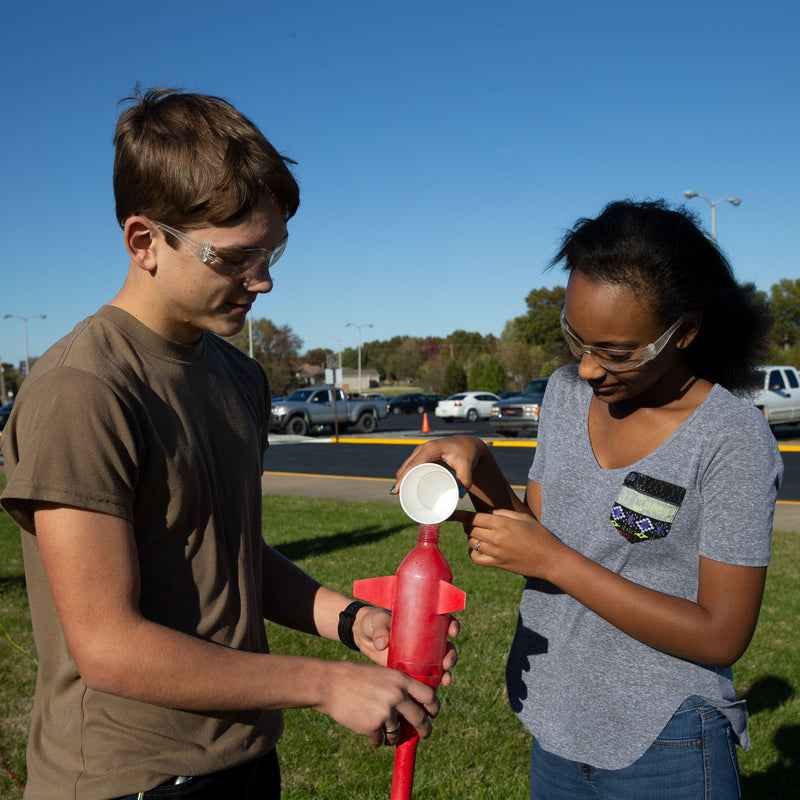
Give twenty-four middle school students twenty hours of aerospace exploration. Students design gliders, build water rockets, rubber band planes, and investigate forces and motion through five interconnected aerospace domains.

In Stock

Students Served: 24
Twenty Hours of Content
5 Subject Areas
5 Subject Areas
Physics-Focused
Physics-Focused
Serves Twenty-Four Students
WHAT'S INCLUDED
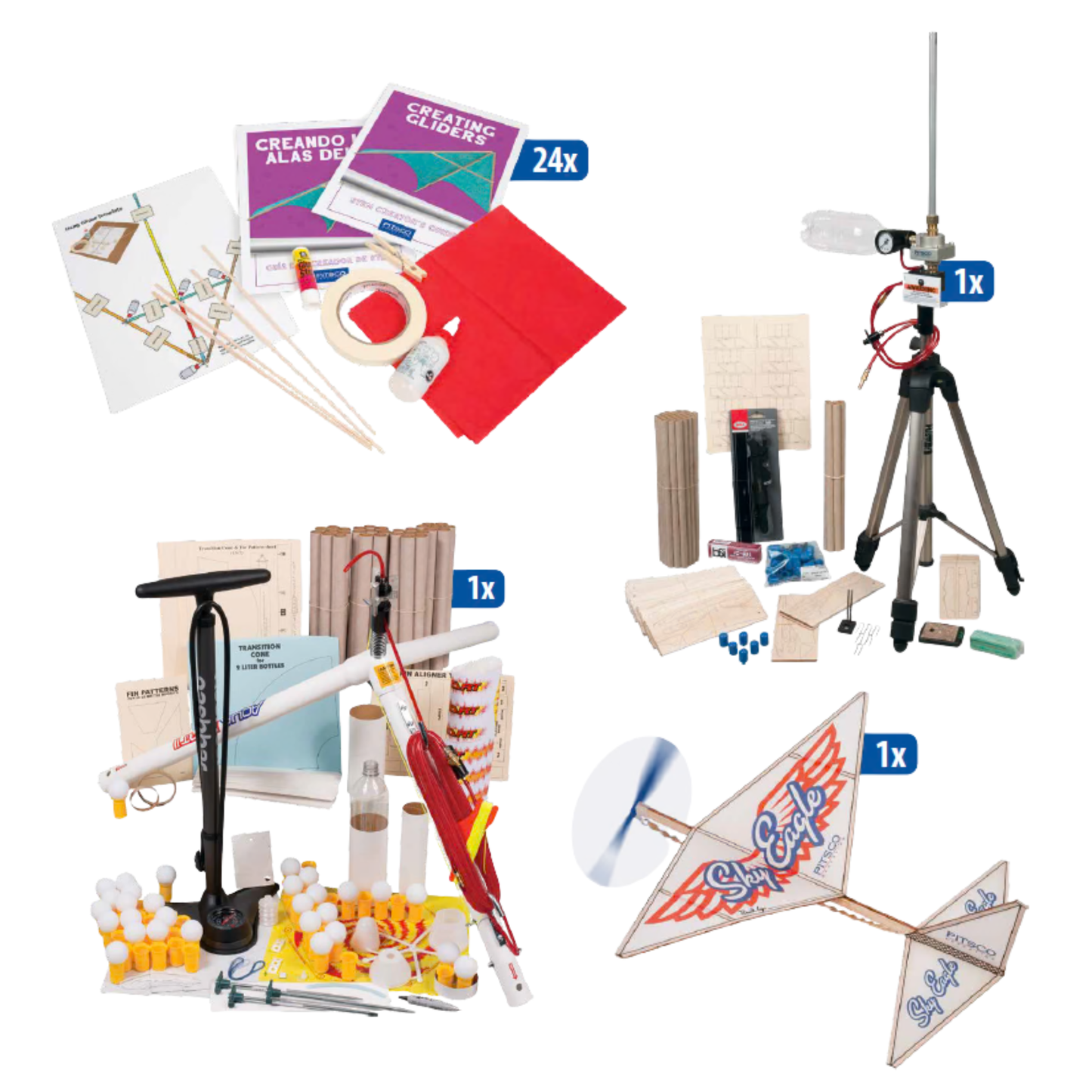
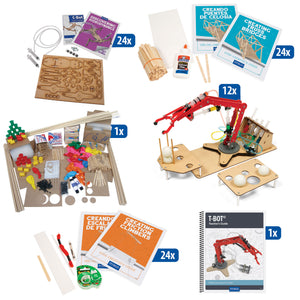
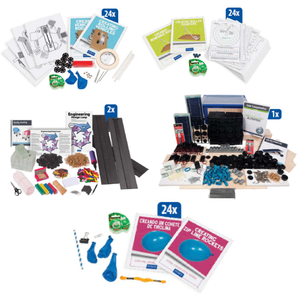
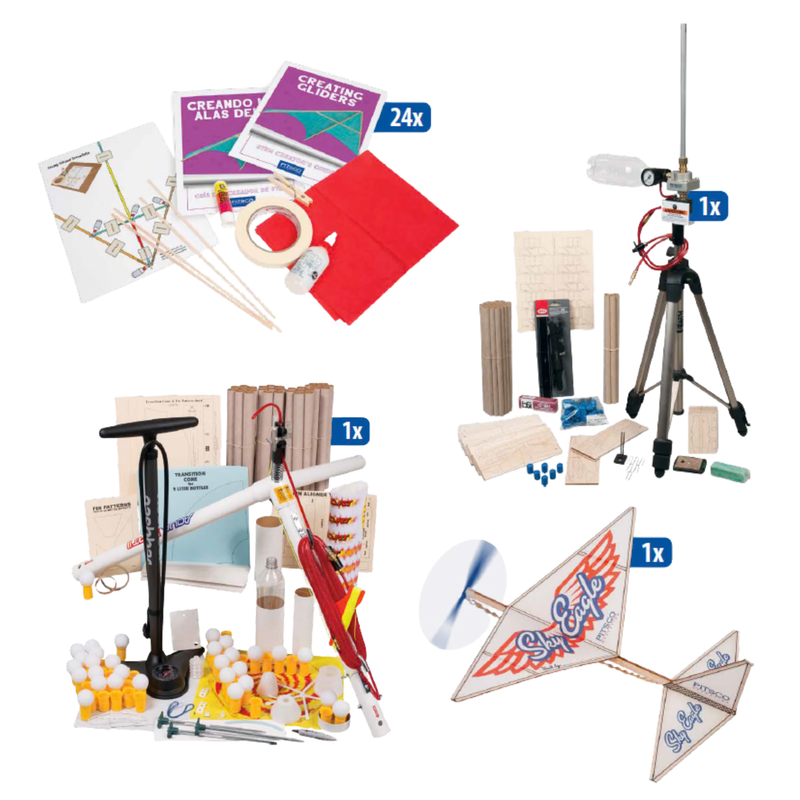
  • 24 Gliders STEM Boost Kit
  • 1 AP (Air-Powered) Rockets & Gliders – Getting Started Package
  • 1 Water Rockets – Getting Started Package
  • 24 Sky Eagle Plane
  • 2 PENCILS (NO. 2) 12PC
  • 12 SCISSORS LEFTY/RIGHTY (5”)
  • 6 TAPE MEASURE (100’/30 M)
  • 12 RULER (12”) PLASTIC
  • 24 FOAMBOARD (3/16” X 11” X 17”)
  • 12 MARKERS, WASHABLE 10PK
  • 12 INSTA-CURE PLUS (1 OZ)
  • 12 TAPE TRANSPARENT
  • 24 SANDPAPER 120 GRIT (9” X 11”) SGL
  • 1 INDEX CARDS (3” X 5”) WHITE PK100
SPECIFICATIONS & SAFETY
  • Quantity: 1
  • Students Served: 24 students
  • Curriculum Hours: 20
View full details
Voyager Program Grades 6-8 Aerospace
Voyager Program Grades 6-8 Aerospace

Regular price $1,975.00
Regular price $0.00 Sale price $1,975.00

Frequently Bought Together

1
Discovering solar power kit, wind energy getting started package, earthquake towers getting started package, snap circuits alternative energy kit
+
2
Voyager Program Grades 6-8 Engineering
+
3
creating rolling vehicles kit, creating roller coasters kit, gravity jousting kit, solar vehicles pbl unit, creating zip line rockets kit

Total: $11,325.00 (3 items)
Voyager Program Grades 6-8 Aerospace

Design. Launch. Analyze.

Middle school students explore flight science, forces, motion, and physics through five aerospace domains combining design, building, launching, and data analysis.
Glider Design Engineering

Glider Design Engineering

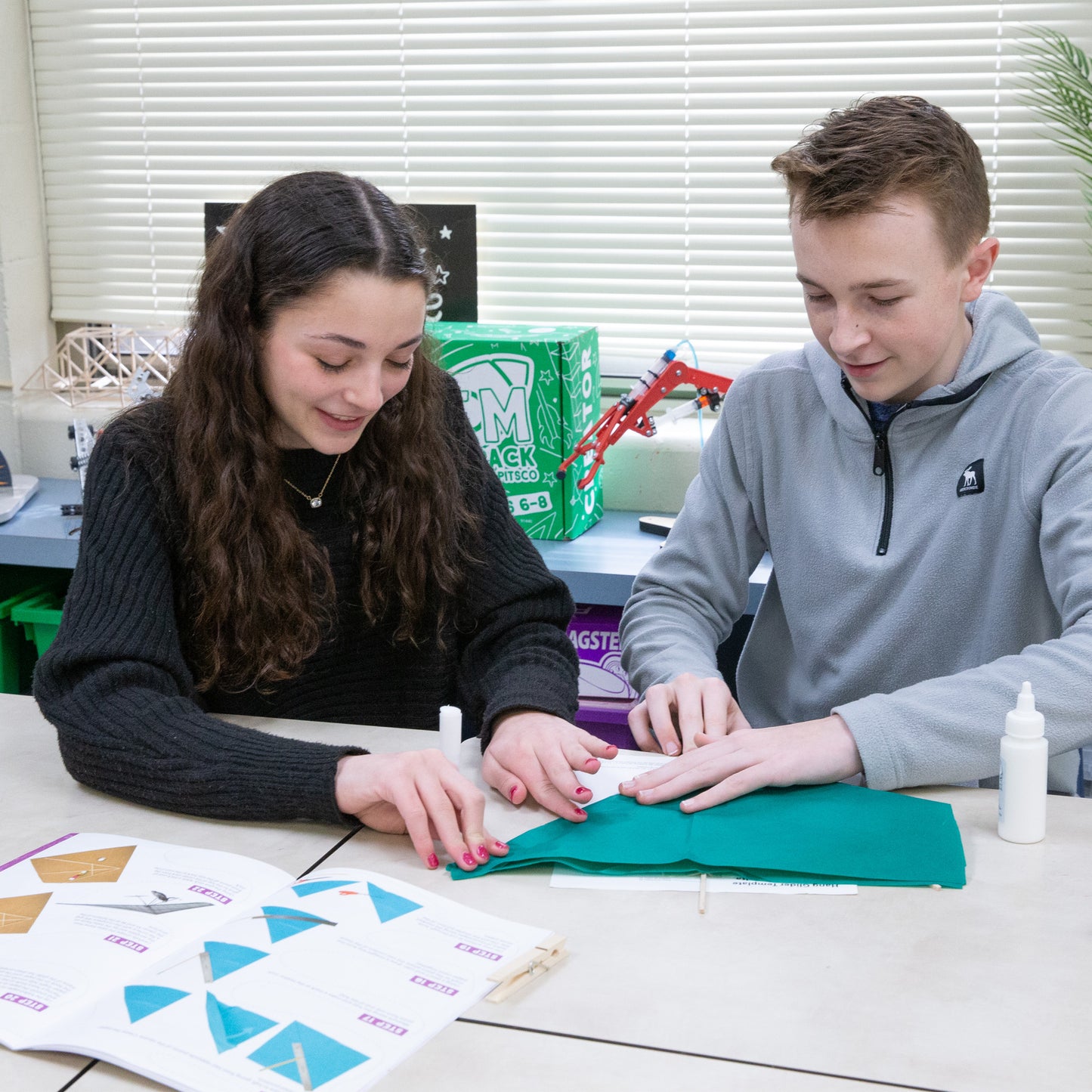
Students design and test hang gliders, investigating aerodynamics and flight performance.

Rocket Science

Rocket Science

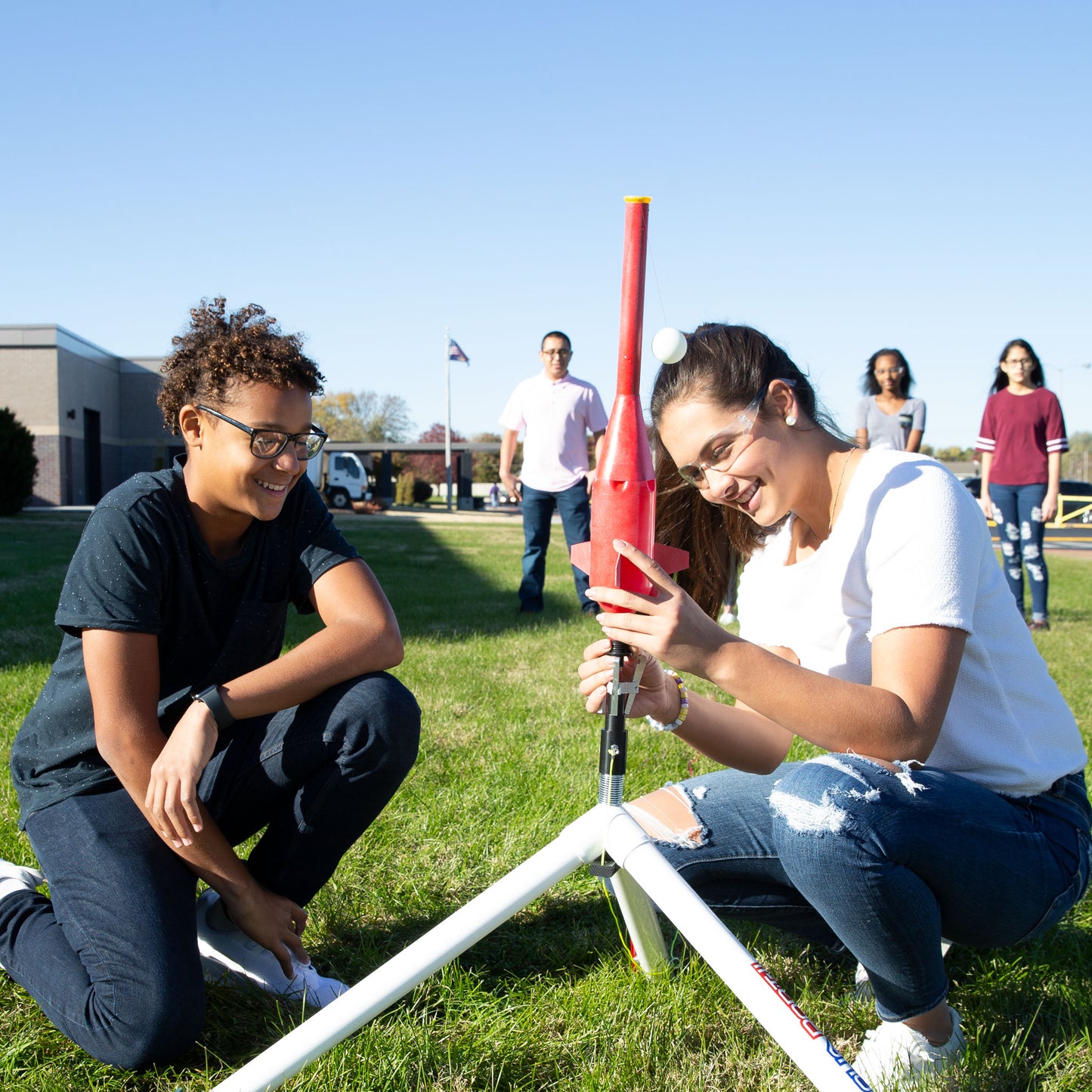
Students build and launch water rockets and rubber band planes, applying physics principles.

Newton's Laws in Motion

Newton's Laws in Motion

Every activity connects to Newton's laws through real experiments.

Flight Data Analysis

Flight Data Analysis

Students collect and analyze flight data, building scientific reasoning.

What Students Will Do

Through twenty hours of aerospace activities, students develop understanding of forces, motion, and physics.
  • Design and test hang gliders
  • Build and launch water rockets
  • Create rubber band planes
  • Investigate forces affecting flight
  • Apply Newton's three laws to experiments
  • Collect flight data and analyze performance
  • Construct evidence-based explanations
  • Participate in design competitions

Compare Similar Products

Feature Current Product
Voyager Program Grades 6-8 Aerospace
Voyager Program Grades 6-8 Environmental Science Voyager Program Grades 6-8 Engineering
Price $1,975.00 $4,575.00 $3,575.00
Subject Focus AerospaceEnvironmental Science Engineering
Curriculum Hours 2020 20
Number of Subjects 55 5
Hands-On Kits Included
Standards Aligned
Curriculum Included
Best For Programs wanting flight science and physicsPrograms wanting renewable energy Programs wanting robotics
View Details View Details

Step 1—Unbox and Organize materials. 

Step 2—Choose your aerospace domain from five options. 

Step 3—Follow lesson plans with safety guidelines. 

Step 4—Facilitate design-build-test cycles. 

Step 5—Celebrate with launch competition.

Forces, Motion, and Flight Physics

The Voyager Aerospace program builds understanding of Newton's laws and aerodynamics through hands-on design and testing. Students practice engineering and scientific reasoning while exploring real-world physics.

Complete curriculum across five aerospace domains with objectives, design challenges, and assessment strategies for gliders, rockets, planes, forces, and flight competition.

Why Teachers Love Voyager Program Grades 6–8 Aerospace

Twenty Hours of Physics-Focused Content

Twenty Hours of Physics-Focused Content

Five aerospace domains with structured investigations.

No Aerospace Background Needed

No Aerospace Background Needed

Complete safety protocols and guides.

Backed by Fifty Years

Backed by Fifty Years

Trusted by educators since 1971.

Newton's Laws in Action

Newton's Laws in Action

Real flights demonstrating physics principles.

Data-Driven Analysis

Data-Driven Analysis

Flight data collection and analysis skills.

Multiple Design Challenges

Multiple Design Challenges

Gliders, rockets, and planes competitions.

"Your curriculum is deeper. You deliver 21st-century skills that truly teach kids how to not just look at the content but also be able to communicate and work collaboratively. And there is no comparison to your customer service."

—Cary Johnson, K-12 Director of Innovation and Technology, Placentia-Yorba Linda Unified School District, CA

Flexible Purchasing Options

Pricing and volume discounts are built in—choose the path that fits your purchasing process.

Buy Online

Best if you know what you need and can buy online.

Ready to purchase now? Add this to your cart for fast, easy checkout.

Request a Quote

Need a quote for approval or purchase order processing?

Request a quote or connect with an Education Advisor before purchasing.

Request a Quote

Get Expert Guidance

Exploring options or planning a larger implementation?

Our Education Advisors can help with product selection, curriculum, and professional learning.

Book a Meeting

Frequently Asked Questions

What is the difference between Venturer and Voyager?

Venturer includes ten hours. Voyager expands to twenty hours with rubber band planes, AP Rockets, and full curriculum.

Do water rockets require outdoor space?

Water rocket launches are best outdoors but can be modified for indoor use.

Do students really learn physics through flight?

Yes. Students apply Newton's laws directly through their designs and data.

Are safety guidelines comprehensive?

Yes. Complete safety protocols for all rocket and flight activities.

Is this aligned to education standards?

Yes. All activities align with NGSS for grades 6–8 in forces, motion, and energy.

Can this support competitive students?

Absolutely. Flight competitions appeal to competitive learners.