
Structures Testing Instrument 2.0
Regular price
$1,160.00
Regular price
$0.00
Sale price
$1,160.00
Unit price
per
Clearance
Clearance

Clearance

Clearance

Clearance

Clearance


The Structures Testing Instrument 2.0 Puts Eight Hundred Pounds of Precision Load Testing in Student Hands
Regular price
$1,160.00
Regular price
$0.00
Sale price
$1,160.00
Unit price
per
Shipping calculated at checkout.
⚠️ Clearance Item - Final Sale
All clearance sales are final. No returns, refunds, or exchanges.
SKU: SKU:45332
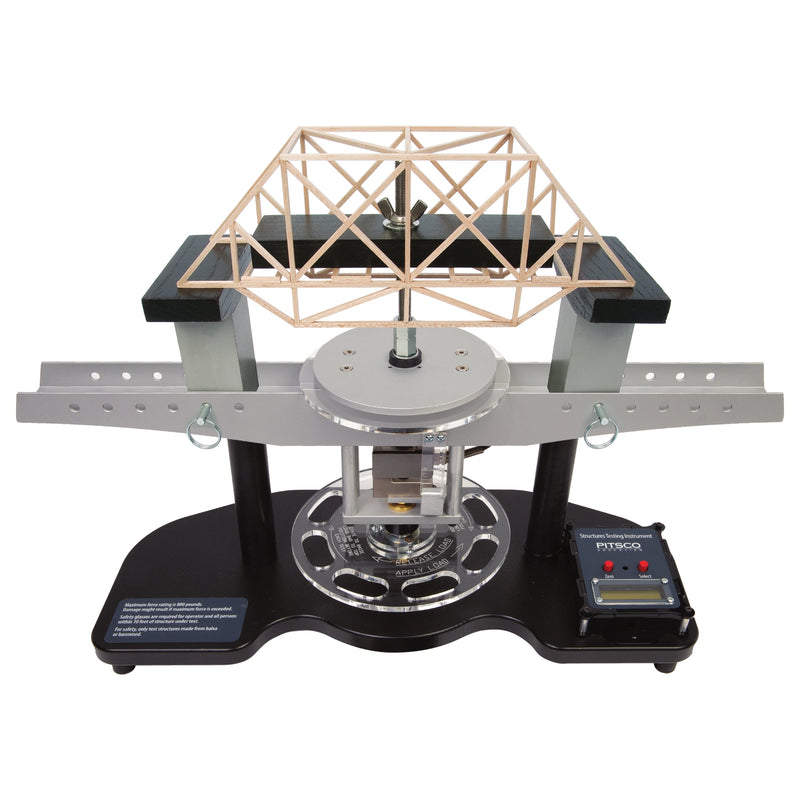
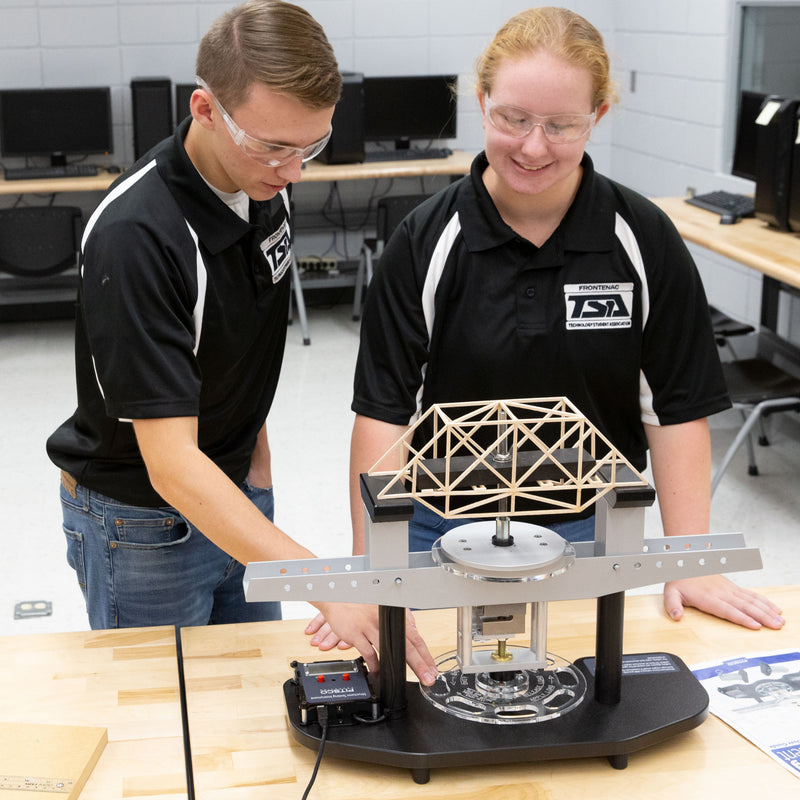
Students design bridges, towers, and frames—then find out exactly how strong they are. The Structures Testing Instrument 2.0 applies up to eight hundred pounds of precisely controlled hydraulic force while a digital display captures peak and current load in real time. An incremental pressure valve gives students complete control over the loading rate, so they pinpoint the exact moment of failure—not just "it broke." Includes The Pitsco Bridge Book, a Model Tower student guide, acrylic tower shield, load blocks, span columns, and everything needed to start testing on day one. If your program runs bridge or tower competitions, this is the testing instrument your students will see at the event.
Low stock
Couldn't load pickup availability
Students Served: 20–28 students (team-based testing)


WHAT'S INCLUDED
- The Pitsco Bridge Book
- Model Tower student guide
- Structures Testing Instrument
- Acrylic tower shield
- 6 roadbed load blocks
- 2 span columns
- 2 structure supports
- 2 span locking pins
- Threaded rods
- Tower load plate
- Washer, hex nut, and wing nut
- Power supply
SPECIFICATIONS & SAFETY
- Dimensions: 23" x 8.5" x 8"




Frequently Bought Together
1
+
2


+
3


Build It. Break It. Learn from It.
Eight hundred pounds of precisely controlled force, a digital display that captures the exact peak load, and an incremental pressure valve that lets students find the failure point—not just smash through it. The STI 2.0 is the testing standard for Pitsco bridge and tower programs.

Incremental Hydraulic Pressure Valve
Students control the loading rate with a precision valve, applying force gradually pound by pound. This lets them watch the structure flex and hear it creak before failure—capturing the exact breaking point, not just a sudden collapse.

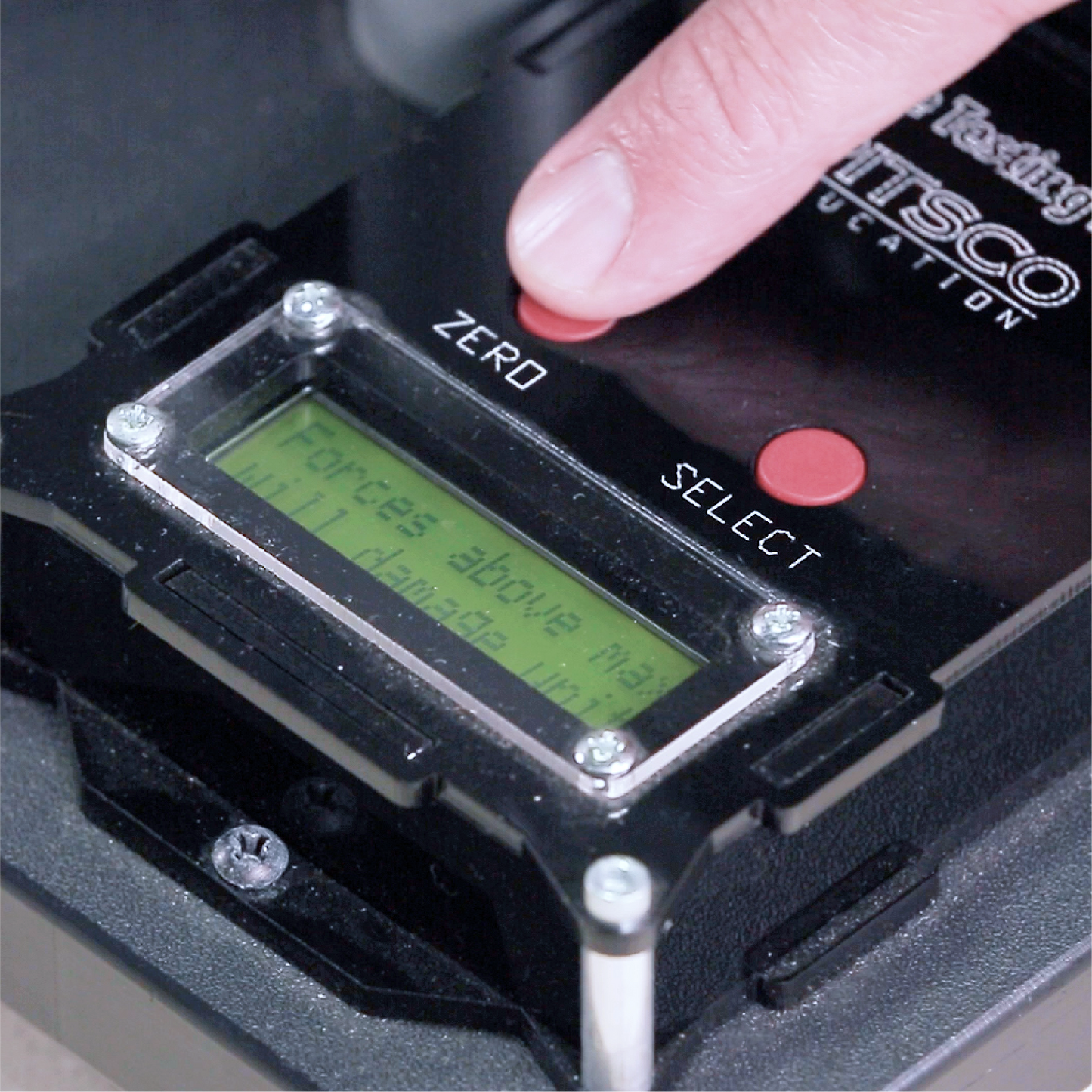
Digital Peak and Current Load Display
A real-time digital readout shows both the current load being applied and the peak load at failure. Students record exact numbers for data analysis—no estimating, no "about two hundred pounds."

Acrylic Tower Shield
When structures fail under eight hundred pounds of force, pieces can fly. The included acrylic shield protects students while still allowing them to watch the failure happen—safety and observation in one design.

Complete Bridge and Tower Testing Kit
Six roadbed load blocks, two span columns, span locking pins, a tower load plate, and threaded rods give you the fixtures to test bridges, towers, columns, and beams right out of the box. The Pitsco Bridge Book and Model Tower guide provide student-ready project instructions.
What Students Will Do
Students design, build, and test structures to measured failure, then analyze data to optimize their next design.
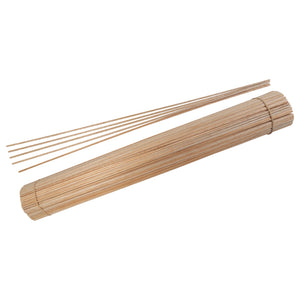
- Design a bridge, tower, or column using balsa or other materials
- Calculate predicted load capacity based on design
- Mount the structure on the testing instrument
- Apply incremental load using the hydraulic pressure valve
- Observe structural flex and listen for stress indicators
- Record the peak failure load from the digital display
- Analyze failure mode—where did it break and why?
- Calculate load-to-weight ratio (efficiency)
- Redesign and retest to improve performance
Compare Similar Products
| Feature |
Current Product
Structures Testing Instrument 2.0
| Structure Testing Device | EQˢ Tremor Table |
|---|---|---|---|
| Price | $1,160.00 | $335.00 | $1,495.00 |
| Max Load | 800 lbs | ~100 lbs (sand) | ~400 lbs (vibration) |
| Load Method | Incremental hydraulic pressure | Gradual sand loading | Motorized shake table |
| Digital Display | Peak and current | — | Vibration data |
| Test Type | Compression (bridges, towers, columns) | Gravity load (bridges) | Seismic simulation (towers) |
| Grade Range | Grades 3–8 | Grades 3–8 | Grades 6–12 |
| Included Curriculum | Bridge Book + Model Tower guide | — | Earthquake Tower guide |
| Best For | Precision bridge and tower testing | Basic bridge load testing | Earthquake and seismic design |
| View Details | View Details |
Support Materials
Videos, guides, and resources to help you get the most out of this product.
Videos
Structures Testing Instrument 2.0 – Using the Tester
Why Teachers Love Structures Testing Instrument 2.0

Students Learn More from Failure Than Success
When a bridge snaps at four hundred twelve pounds, every student wants to know why. The digital display gives them the number; the failure point gives them the lesson.

Precision That Changes the Conversation
Incremental control means students find the exact breaking point, not "somewhere around two hundred." That precision turns testing day into a data-driven engineering exercise.
Competition-Grade Equipment in Your Classroom
Many bridge and tower competitions use similar hydraulic testing instruments. Students who practice on the STI 2.0 are ready for the real event.

Safe Enough for Third Graders, Powerful Enough for Eighth
The acrylic tower shield protects students during eight-hundred-pound failures. Young students test small balsa bridges; older students push the limits with complex truss designs.

Everything You Need to Start Testing
Bridge Book, Model Tower guide, load blocks, span columns, tower plate, and the testing instrument itself. No additional equipment purchases to get started—just add building materials.

Drives Real Engineering Iteration
When one team’s bridge holds six hundred pounds and another’s snaps at one hundred fifty, the redesign conversation writes itself. Students analyze failures, optimize designs, and come back stronger.