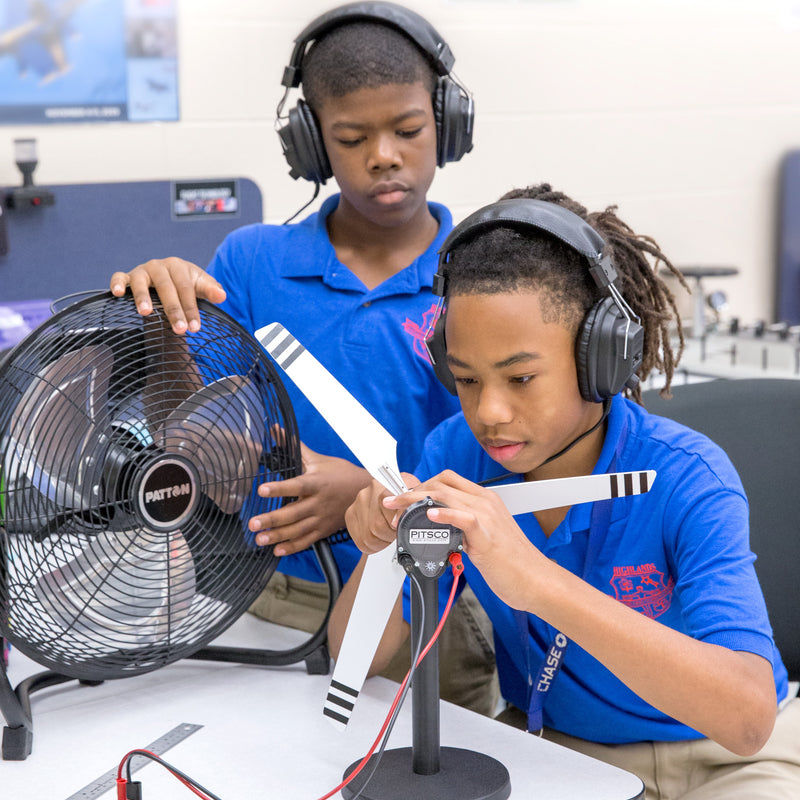
STEM Explorers: Environmental Science and Sustainability

Regular price $3,799.00
Regular price $0.00 Sale price $3,799.00
Grades 6-8

STEM Explorers: Environmental Science and Sustainability—Power a Sustainable Future Through Hands-On Energy Investigations

Regular price $3,799.00
Regular price $0.00 Sale price $3,799.00
Shipping calculated at checkout.

⚠️ Clearance Item - Final Sale

All clearance sales are final. No returns, refunds, or exchanges.

SKU: SKU:93832

Students investigate renewable energy by designing and testing real solar vehicles, wind turbines, and energy conversion systems. Thirty-nine class periods of curriculum guide students through agricultural technology, solar engineering, and wind energy—applying data-driven thinking to solve sustainability challenges.

In Stock

Students Served: 24
Curriculum Included
Curriculum Included
Renewable Energy Focus
Standards Aligned
Standards Aligned
Includes Microsoft FarmBeats
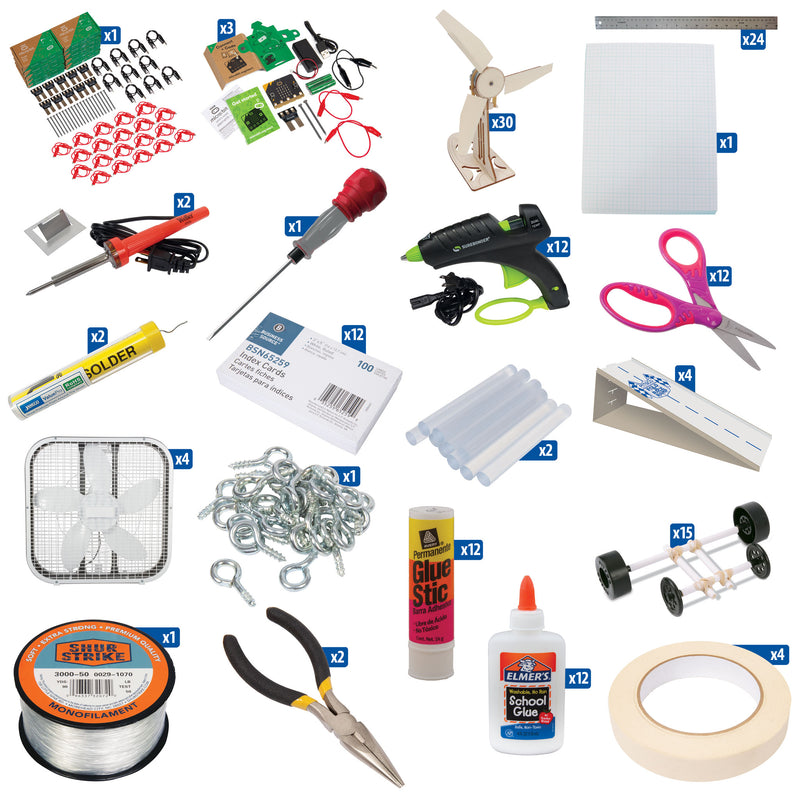
WHAT'S INCLUDED
  • 1 Microsoft FarmBeats for Students Club 10-Pack
  • 3 Microsoft FarmBeats for Students Starter Kits
  • 1 Getting Started with PBL- E-Learning
  • 1 Solar Transportation Kit
  • 1 WinDynamo II and III
  • 1 WinDynamo III Fan Assembly
  • 30 Wind Gen Plus Kits
  • 24 Rulers Metric Rulers
  • Graph Paper
  • 12 Lefty/Righty Scissors
  • 4 Race Ramps
  • 4 Fold and Roll Sticks
  • 15 Gravity Racer Kit
  • 4 Masking Tape (3/4”)
  • 1 Teacher Resources
  • 12 Cordless/Corded Dual-Temp Glue Gun
  • 2 Multi-Temp Glue Slugs
  • 2 Soldering Pencils
  • 2 Solder
  • 12 White School Glues
  • 2 Long-Nose Pliers
  • 1 Standard Screw Eyes
  • 1 Dragster Guideline
  • 4 20” Box Fans
  • 12 Glue Sticks
  • 2-in-1 Screwdriver
  • 12 Lined Index Cards 100 packs (3”x5”)
  • 1 Environmental Science and Sustainability Teacher Resources
SPECIFICATIONS & SAFETY
  • Students served: 24
  • Curriculum Length: 39 class periods
View full details
STEM Explorers: Environmental Science and Sustainability
STEM Explorers: Environmental Science and Sustainability

Regular price $3,799.00
Regular price $0.00 Sale price $3,799.00

Frequently Bought Together

1
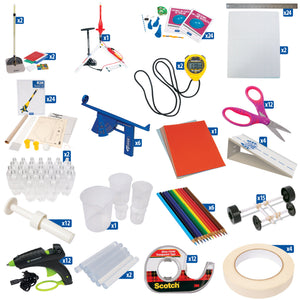
straw rocket pack, water rocket pack, zipline rocket pack, r2k rocket pack, and various tools and materials
+
2
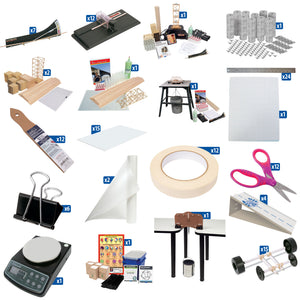
Collage of various tools and materials with quantities indicated.
+
3
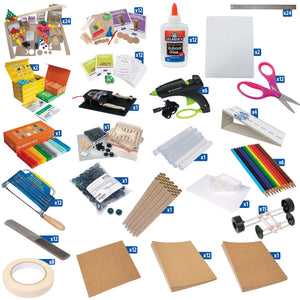
inventions kit, creating inventions kit, 3doodler kit, ap dragsters kit and launcher, and various materials and tools

Total: $13,397.00 (3 items)
STEM Explorers: Environmental Science and Sustainability

Harvest. Convert. Optimize. Innovate.

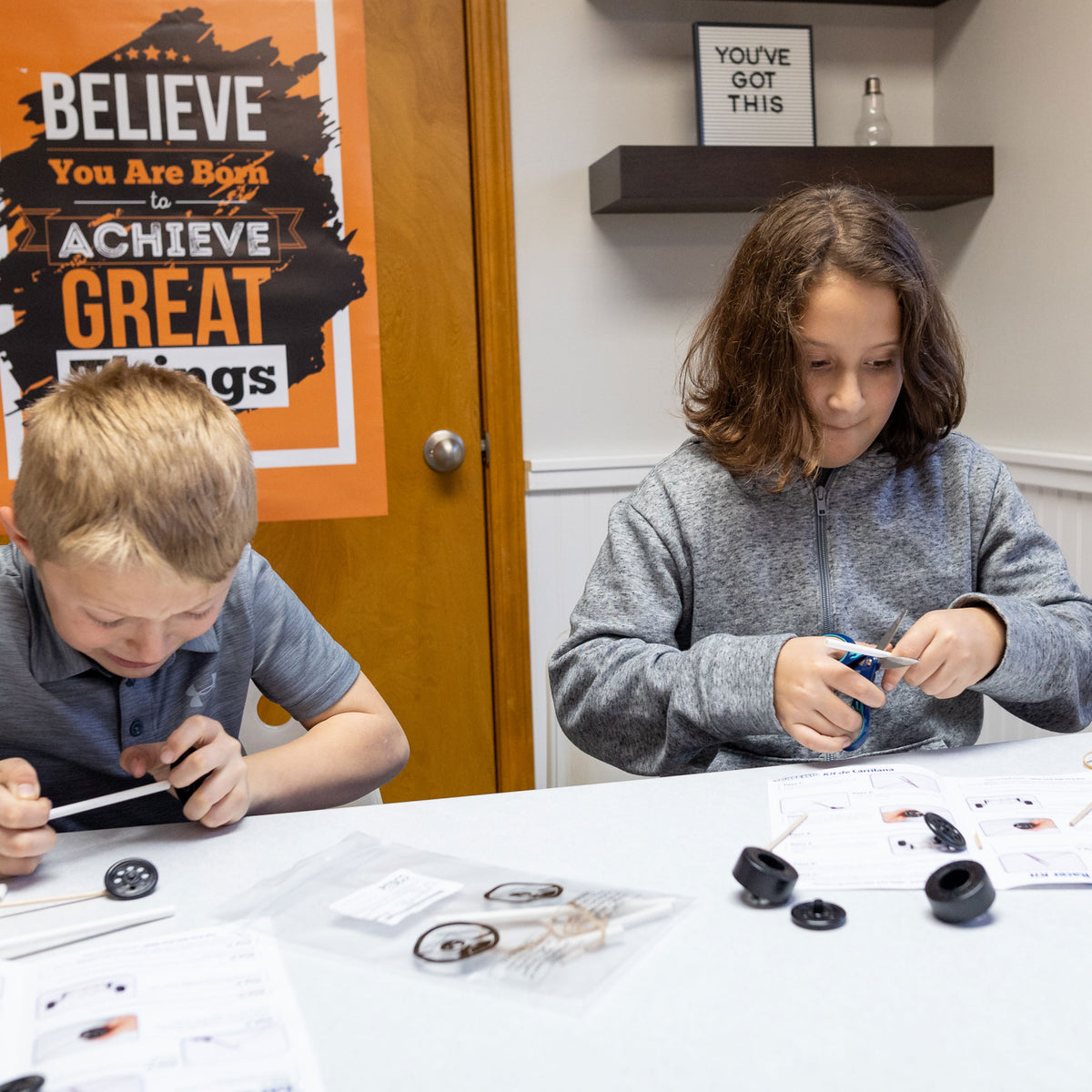
Students do not just learn about renewable energy—they build the systems that harness it. From solar-powered vehicles to wind turbine generators, students design, test, and optimize real energy conversion systems while collecting data that drives every design decision.
Agricultural Technology

Agricultural Technology

Using Microsoft FarmBeats sensors, students measure soil moisture, collect temperature data, and apply big data analytics to agricultural decision-making.

Solar Energy Engineering

Solar Energy Engineering

Students design and construct solar-powered vehicles, experiment with light sources and panel angles, design gear ratios for speed, and build a solar-powered amusement ride.

Wind Energy Engineering

Wind Energy Engineering

Teams build wind turbine generators, measure wind speed with anemometers, test blade pitch angles, and design turbines with optimized blade configurations.

Data-Driven Sustainability

Data-Driven Sustainability

Every experiment generates real data—students graph results, calculate efficiency, and use evidence to optimize their energy systems.

What Students Will Do

From measuring soil moisture with digital sensors to building wind generators that power LED circuits, students experience the full spectrum of renewable energy technology through hands-on engineering.
  • Use moisture sensors to gather agricultural data and compare growing conditions
  • Calculate growing degree units from FarmBeats temperature data
  • Design and construct a solar-powered vehicle and test efficiency variables
  • Build a solar-powered amusement ride guided by a ground track system
  • Construct and test wind turbine generators with varying blade configurations
  • Design a model wind farm for a real school or community location

Compare Similar Products

Feature Current Product
STEM Explorers: Environmental Science and Sustainability
STEM Explorers: Aerospace STEM Explorers: Engineering for Innovation
Price $3,799.00 $2,499.00 $5,899.00
Primary Focus Renewable Energy and SustainabilityFlight Science and Rocketry Inventive Engineering
Grade Level Grades 6–8Grades 6–8 Grades 6–8
Curriculum Length 39 class periods34 class periods 40 class periods
Key Activities Solar vehicles, wind turbines, agricultural sensorsStraw rockets, water rockets, zip lines Roller coasters, dragsters, 3Doodler, inventions
Renewable Energy Systems
Data Sensors/IoT
Best For Schools emphasizing sustainability, environmental science, and real-world clean energy challengesSchools wanting an engaging, affordable entry to hands-on STEM with outdoor launch activities Schools wanting creative engineering challenges with additive manufacturing and design variety
View Details View Details

Step 1—Unbox and Organize: Review the materials list and set up lab stations. Microsoft FarmBeats kits and WinDynamo wind turbines require brief setup; solar kits and tools are ready to use.

Step 2—Agricultural Technology: Students use FarmBeats moisture sensors to measure soil conditions, collect temperature data, and apply big data fusion to determine the best growing locations.

Step 3—Solar Energy Engineering: Teams design and build solar-powered vehicles, experiment with natural vs. artificial light, optimize panel angles and gear ratios, and design a solar-powered amusement ride.

Step 4—Wind Energy Engineering: Students construct model wind generators, measure wind speed at various distances, test blade pitch angles and configurations, and design turbines optimized for energy output.

Step 5—Capstone Design: Students create a model of their school or community with working wind generator prototypes, presenting data-supported placement and design decisions.

Powering a Sustainable Future Through Hands-On Energy Science

The STEM Explorers: Environmental Science and Sustainability program connects students to one of the most pressing challenges of the twenty-first century—clean energy. Through thirty-nine class periods of building, testing, and optimizing real energy systems, students develop the scientific literacy and engineering skills to understand and contribute to sustainable solutions.

Students explore how renewable energy supports professionals in fields such as:

  • Solar energy engineering and photovoltaic system design
  • Wind farm planning and turbine engineering
  • Agricultural technology and precision farming
  • Environmental science and sustainability consulting
  • Data science and IoT sensor networks

They do not just read about sustainability. They build the energy systems of the future.

Science

  • Energy conversion—solar to electrical, wind to mechanical to electrical
  • Light, motion, and mechanical systems affecting efficiency
  • Soil science and agricultural data analysis
  • Controlled experimentation with environmental variables

Technology

  • Microsoft FarmBeats IoT sensors for agricultural data collection
  • WinDynamo wind turbine generators and anemometers
  • Solar panels, motors, and energy conversion hardware
  • Multimeters for measuring voltage and output

Engineering

  • Designing solar vehicles and wind turbines for maximum efficiency
  • Optimizing gear ratios, blade configurations, and panel angles
  • Engineering within real-world constraints—weather, materials, space
  • Presenting design decisions with data-driven evidence

Math

  • Calculating energy output, efficiency ratios, and gear ratios
  • Graphing wind speed, voltage, and performance data
  • Growing degree unit calculations from temperature data
  • Measurement, unit conversion, and proportional reasoning

Agricultural Technology (2 lessons):

• Gathering Data Through Sensors—Use moisture sensors to measure soil content, monitor environment, and design an agent to notify a producer

• Analyzing Data Activities—Use temperature data from FarmBeats to calculate growing degree units and apply big data fusion for greenhouse location decisions

Solar Energy Engineering (6 lessons):

• Alternative Energy—Learn about alternative forms of energy and their growing use

• Construction—Design and construct a solar-powered vehicle

• Investigating Natural vs Artificial—Determine how the light source affects solar vehicle operation

• Determining Optimum Angle—Determine the optimum angle for solar panel placement

• Designing Gear Ratios—Design a vehicle with the optimum gear ratio for maximum speed

• Solar-Powered Amusement Ride—Design a solar-powered amusement ride guided by a ground track system

Wind Energy Engineering (7 lessons):

• Energy Efficiency—Learn how alternative forms of energy are captured and converted

• Construction—Construct a model wind generator

• Measuring Wind Speed—Use an anemometer to measure wind speed at various distances and graph results

• Varying Pitch Angle—Conduct experiments to determine the optimum blade pitch angle

• Measuring Voltage—Use a multimeter to determine voltage at various pitch angles and wind speeds

• Turbine Design—Design and construct a turbine with four, five, or six blades for optimum output

• Wind Flow—Create a model of the school or community with working wind generator prototypes

Why Teachers Love STEM Explorers: Environmental Science and Sustainability

Thirty-Nine Class Periods

Thirty-Nine Class Periods

Nearly a full semester of structured, hands-on environmental science and engineering curriculum.

Three Energy Systems

Three Energy Systems

Agricultural sensors, solar vehicles, and wind turbines give students the broadest possible exposure to renewable energy.

Industry-Standard Sensors

Industry-Standard Sensors

Microsoft FarmBeats brings the same IoT data collection tools used by professional farmers into middle school classrooms.

Real Energy Hardware

Real Energy Hardware

WinDynamo turbines and solar vehicle kits produce measurable energy output students can test and optimize.

Sustainability Relevance

Sustainability Relevance

Lessons connect directly to twenty-first-century energy challenges students will face in their careers.

Educator Trusted

Educator Trusted

Pitsco has delivered hands-on STEM curriculum to classrooms nationwide for over fifty years.

"Your curriculum is deeper. You deliver 21st-century skills that truly teach kids how to not just look at the content but also be able to communicate and work collaboratively. And there is no comparison to your customer service."

—Cary Johnson, K-12 Director of Innovation and Technology, Placentia-Yorba Linda Unified School District, CA

Flexible Purchasing Options

Pricing and volume discounts are built in—choose the path that fits your purchasing process.

Buy Online

Best if you know what you need and can buy online.

Ready to purchase now? Add this to your cart for fast, easy checkout.

Request a Quote

Need a quote for approval or purchase order processing?

Request a quote or connect with an Education Advisor before purchasing.

Request a Quote

Get Expert Guidance

Exploring options or planning a larger implementation?

Our Education Advisors can help with product selection, curriculum, and professional learning.

Book a Meeting

Frequently Asked Questions

What grade levels is this program designed for?

STEM Explorers: Environmental Science and Sustainability is designed for Grades 6–8. The hands-on investigations naturally differentiate for mixed-ability classrooms.

Do teachers need a science background to teach this?

No. The teacher resource guide includes complete lesson plans, setup instructions, answer keys, and assessment rubrics for all thirty-nine class periods.

What technology do students need for the FarmBeats activities?

The Microsoft FarmBeats sensors connect to standard classroom devices. No specialized lab equipment, software licenses, or internet infrastructure beyond basic connectivity is required.

Do we need outdoor space for the solar activities?

Solar vehicle activities benefit from natural sunlight but can also be conducted indoors using the artificial light experiments included in the curriculum.

How long does the program take to complete?

The curriculum spans thirty-nine class periods. Schools can teach it as a full semester, a rotation module, or spread units across the year.

Are consumable materials replaceable?

Yes. Wind Gen Plus Kits, solar vehicle components, and other consumable materials are available separately from Pitsco for easy replenishment.