
Earth Science Grades 5-6 Activity Bundle


Earth Science Grades 5–6 Activity Bundle—Spheres, Atmosphere, and UV Science
⚠️ Clearance Item - Final Sale
All clearance sales are final. No returns, refunds, or exchanges.
SKU: SKU:92889
Backordered. Order yours today, and we'll ship the moment it's back in.
Couldn't load pickup availability


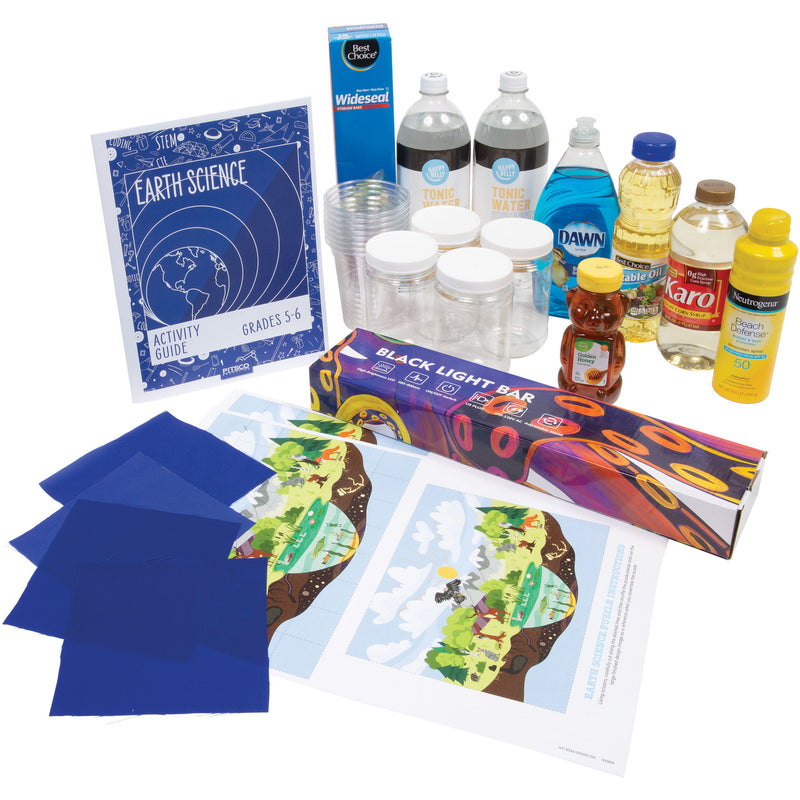
WHAT'S INCLUDED
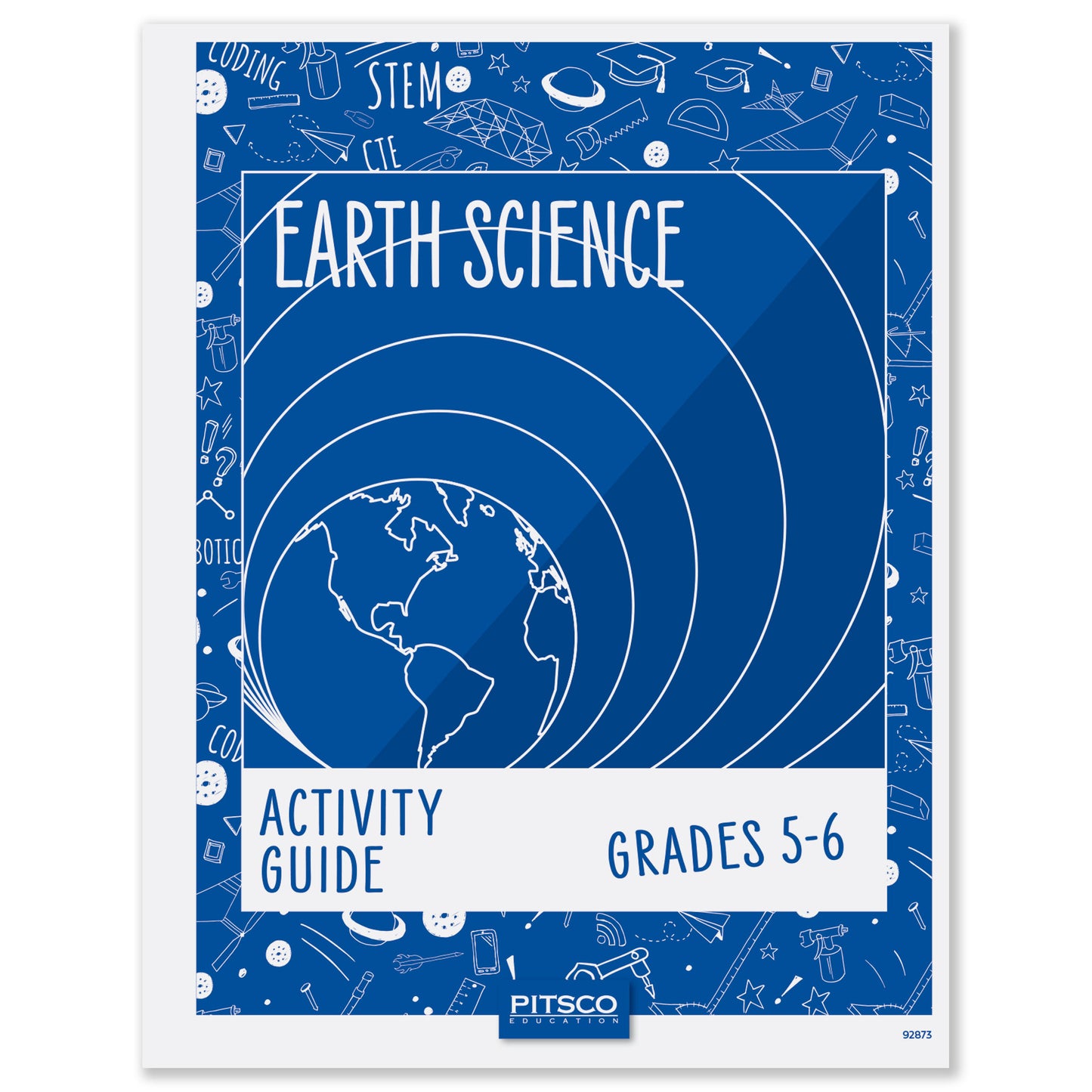
- Activity guide
- Sphere puzzles
- Jars with lid
- Honey
- Corn syrup
- Dish soap
- Vegetable oil
- Blacklight
- Cups
- Zip-top bags
- Sunscreen
- Nylon fabric
SPECIFICATIONS & SAFETY
- Students Served: 10-12
- Tools and Materials Required: Scissors, water, permanent markers, leaves, and liquid glue
- ALLERGEN WARNING: This kit contains honey and corn syrup. Check for bee/honey allergies and tree nut cross-contamination sensitives before use. Inform parents or guardians in advance.


Frequently Bought Together
See the Science. Don't Just Read About It.

Earth's Four Spheres
Students explore the geosphere, hydrosphere, atmosphere, and biosphere through sphere puzzles and model-building. The hands-on format moves students beyond memorizing sphere names into understanding how they interact — a foundational concept for all earth and environmental science.

UV Radiation and the Blacklight Experiment
Students test how different sunscreens block UV rays using a blacklight and nylon fabric. What's invisible under normal light becomes visible under UV — making radiation protection a concept students can see and measure rather than simply accept on faith.

Atmosphere Layers and Density Science
Students layer honey, corn syrup, dish soap, and vegetable oil by density to model Earth's spheres, and explore atmosphere layers through representative model-building. Two experiments connect abstract Earth science structure to tangible, observable phenomena.

Teacher-Ready Activity Guide
The included activity guide structures all four topics with instructions, background content, and guided activities. Teachers can run the full bundle without additional preparation. Scissors, water, permanent markers, leaves, and liquid glue are the only items to source separately.
What Students Will Do
- Explore Earth's four spheres: geosphere, hydrosphere, atmosphere, biosphere
- Assemble sphere puzzles and classify sphere components
- Layer liquids by density (honey, corn syrup, dish soap, vegetable oil) to model Earth's structural layers
- Build a representative model of atmosphere layers
- Test different sunscreens under a blacklight to observe UV blocking
- Measure and compare UV protection across sunscreen types
- Connect UV radiation to real-world sun safety decisions
- Record observations and discuss Earth system interactions
Compare Similar Products
| Feature |
Current Product
Earth Science Grades 5-6 Activity Bundle
| Space Grades 5-6 Activity Bundle | Animals Grades 5-6 Activity Bundle |
|---|---|---|---|
| Price | $145.00 | $124.00 | $89.75 |
| Science Domain | Earth Science | Earth and Space Science | Life Science—Zoology |
| Activities | 3 | 3 | 3 |
| Grade Level | 5-6 | 5-6 | 5-6 |
| Students Served | 10–12 | 10–12 | 10–12 |
| Activity Guide Included | |||
| Materials Provided | |||
| Creative Design | |||
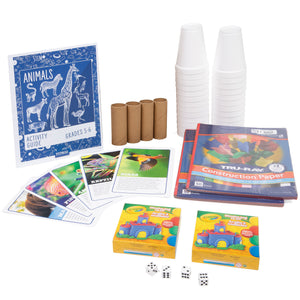
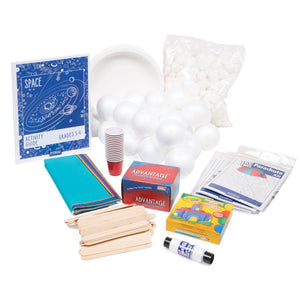
| Standout Experiment | UV/blacklight sunscreen test | Design a lander to safely transport a payload to the moon | Build 3-D animal models |
| View Details | View Details |
Why Teachers Love Earth Science Grades 5-6 Activity Bundle

A UV Experiment That Shows, Not Tells
The blacklight sunscreen activity makes an invisible concept immediately visible. Students test sunscreens, observe the difference under UV light, and draw their own evidence-based conclusions about SPF claims. No other explanation of UV protection is as memorable.

Four Topics, One Bundle
Earth's spheres, atmosphere layers, density modeling, and UV radiation are four distinct instructional units covered by one kit. Teachers can run all four as a connected sequence or select individual activities to match exactly what their unit plan requires.

Serves a Full Small Group
One bundle equips 10–12 students, making it practical for small-group science instruction, science clubs, afterschool enrichment, and targeted intervention groups without requiring the class-set economics of a full 30-student kit.

Teacher-Ready From the Box
The activity guide structures everything. Teachers don't need to write instructions, gather background content, or design activities. The only items to source separately are scissors, water, permanent markers, leaves, and liquid glue — standard classroom supplies.

Density Layers Students Can See
Layering honey, corn syrup, dish soap, and vegetable oil in a jar produces a visually striking model that students built themselves. The layers stay distinct long enough for students to observe, sketch, and discuss — no time pressure, no chemical hazards.

Flexible Across One Day or Multiple Sessions
All four activities can be run in a single extended class period or distributed across multiple sessions. Teachers who want to focus on a single concept — the UV experiment only, for example — have that flexibility without needing a different product.