
Racing STEM Boost Kit


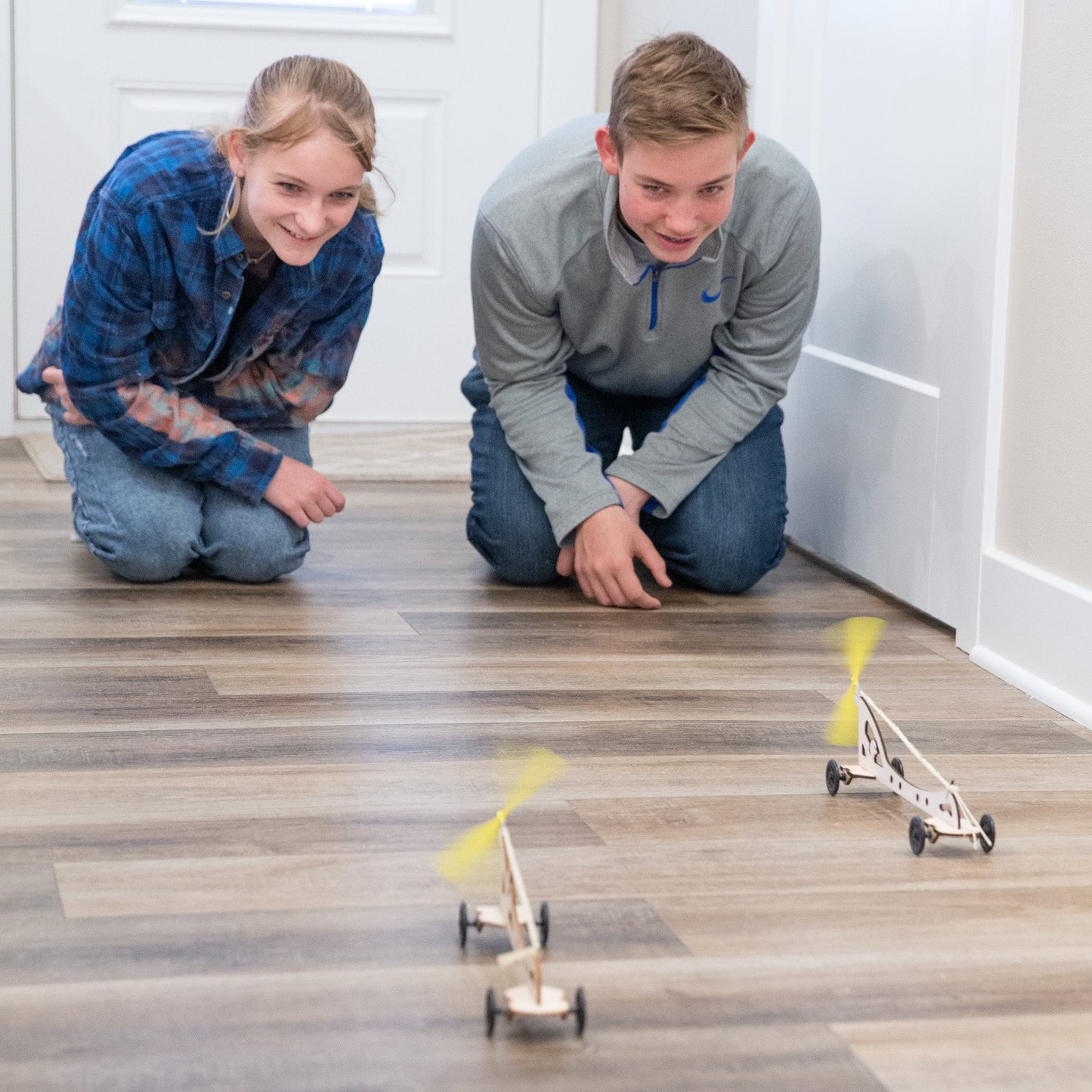
Discovering Racing STEM Boost Kit—Build and Race Four Prop Cars
⚠️ Clearance Item - Final Sale
All clearance sales are final. No returns, refunds, or exchanges.
SKU: SKU:92098
Backordered. Order yours today, and we'll ship the moment it's back in.
Couldn't load pickup availability


WHAT'S INCLUDED
- 1 student guide
- Supplies to build and test four prop racers
SPECIFICATIONS & SAFETY
- Students Served: 1
- Not Included: scissors, white glue, ruler, markers, tape, tape measure, stopwatch or timer, calculator



Frequently Bought Together
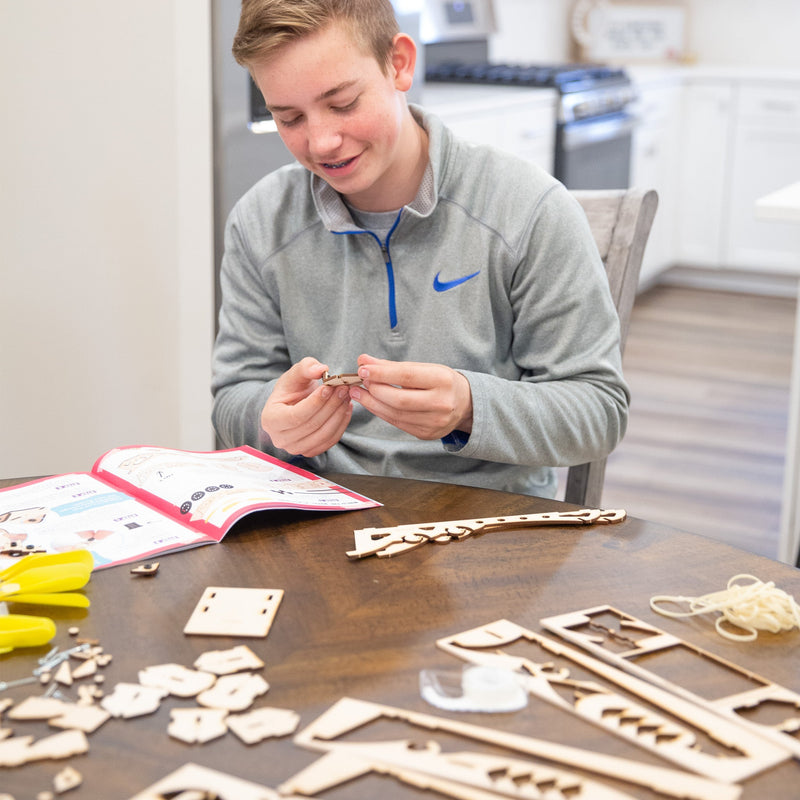
Engineering and Controlling Propeller Cars.

Build Four Prop Racers
All four racers bring a new design iteration — students apply what they learned from the previous build to make the next car faster, more stable, or more controllable. Four builds means four real opportunities to think like an engineer.

Engineering and Controlling Propeller Cars
Students don't just assemble a kit. They explore how changes in propeller placement, counterweight, and chassis design affect how the car moves — forward, straight, curved, fast, or slow. Control is the confirmed learning outcome, not just speed.

Design, Test, and Improve
The four-racer format embeds real engineering iteration. After each build and test, students have data from the track — distance traveled, direction drifted, speed comparison — to inform the next design. The student guide structures this loop at every stage.

Grades 3–8
This kit spans both elementary and middle school, making it one of the most versatile in the STEM Boost series. The engineering concepts scale naturally: elementary students focus on cause and effect; middle school students can apply more formal force-and-motion analysis.
What Students Will Do
- Assemble propeller car components: chassis, prop, axles, wheels
- Test the first racer on a flat surface and observe performance
- Identify one variable to change: propeller placement, weight, or chassis design
- Build a second racer incorporating the change and test again
- Compare results across builds: which design goes farther? Straighter?
- Build a third and fourth racer, continuing to apply design improvements
- Connect propeller car behavior to engineering concepts: force, propulsion, control
- Use required tools (scissors, ruler, tape measure, stopwatch) to measure results
Compare Similar Products
| Feature |
Current Product
Racing STEM Boost Kit
| Inventions STEM Boost Kit | Rolling Vehicles STEM Boost Kit |
|---|---|---|---|
| Price | $45.75 | $19.75 | $19.75 |
| Primary Focus | Propeller car engineering + speed + control | Engineering design process + open-ended invention | Balloon-powered paper racer design + propulsion |
| Grade Level | Grades 3–8 | Grades 6–8 | Grades 6–8 |
| Student Guide | 1 guide (English only) | 2 guides (English + Spanish) | 2 guides (English + Spanish) |
| Students Per Kit | 1 | 1 | 1 |
| Number of Builds | 4 prop racers | Open-ended | 1 paper racer (iterative) |
| Engineering Design | |||
| Key Learning Hook | Build 4 racers — each one improves on the last | No single right invention — EDP drives decisions | How design choices affect speed and distance |
| View Details | View Details |
Support Materials
Videos, guides, and resources to help you get the most out of this product.
Why Teachers Love Racing STEM Boost Kit

Four Builds, Four Chances to Improve
The four-racer structure gives students three additional opportunities to apply what they learned — so the engineering iteration loop isn't described, it's actually experienced four times.

Control Is the Learning Outcome
The kit's confirmed framing is engineering and controlling propeller cars — not just building them or making them fast. Control requires understanding the relationship between design variables and behavior, which is a more sophisticated engineering concept than speed alone.

Spans Elementary and Middle School
At grades 3–8, this is one of the most grade-versatile kits in the STEM Boost series. Elementary students explore cause and effect; middle school students apply force-and-motion analysis. The same kit works in both contexts with different instructional framing.

One Kit, Infinite Value
At $45.75 per kit, cost-per-learner pricing is transparent. The higher price point reflects the four-build structure and expanded supply set — students receive significantly more build material than in any other kit in the series.

Real Tools, Real Engineering Practice
Students must gather scissors, a ruler, tape measure, stopwatch, and calculator. Using standard tools to measure and compare test results is authentic engineering practice — not a simplified proxy activity.

Extends Existing Physics or Engineering Units
The prop racer format works as a standalone engineering design challenge or as a hands-on extension for force, motion, and propulsion units. Teachers can use the four-build structure as a multi-day lab activity or compress it into a single session.