STEM Explorers: Aerospace

Regular price $2,499.00
Regular price $0.00 Sale price $2,499.00
Grades 6-8

STEM Explorers: Aerospace—Launch Learning Through the Science of Flight

Regular price $2,499.00
Regular price $0.00 Sale price $2,499.00
Shipping calculated at checkout.

⚠️ Clearance Item - Final Sale

All clearance sales are final. No returns, refunds, or exchanges.

SKU: SKU:93826

Students explore the science of flight through hands-on experimentation with straw rockets, water rockets, and zip line challenges. Thirty-four class periods of curriculum guide students through motion, force, energy, and iterative design—building real engineering instincts one launch at a time.

In Stock

Students Served: 24
Curriculum Included
Curriculum Included
No Experience Required
Standards Aligned
Standards Aligned
Hands-On From Day One
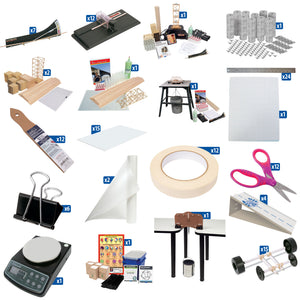
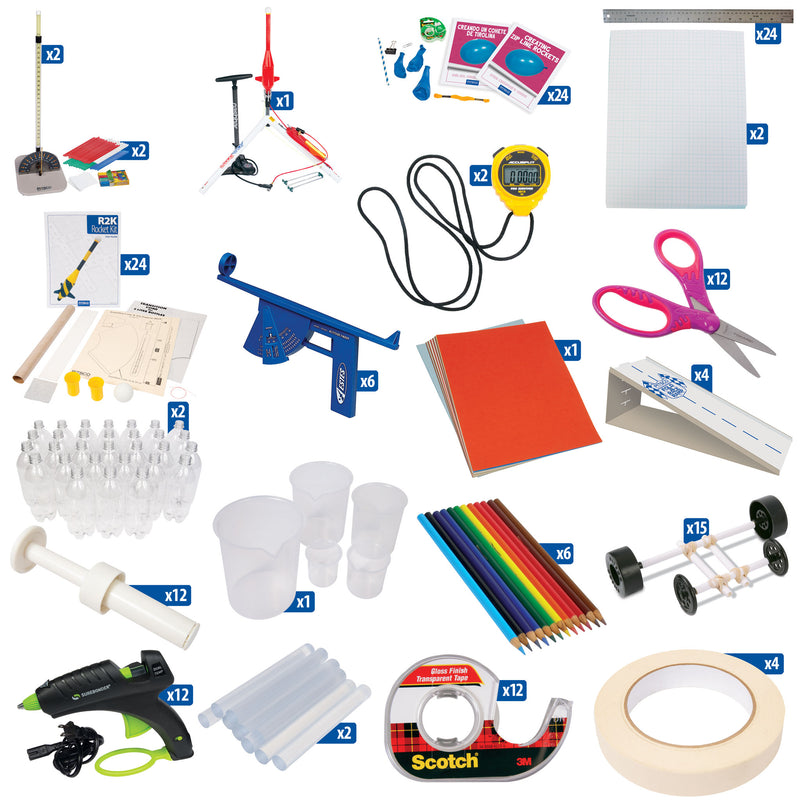
WHAT'S INCLUDED
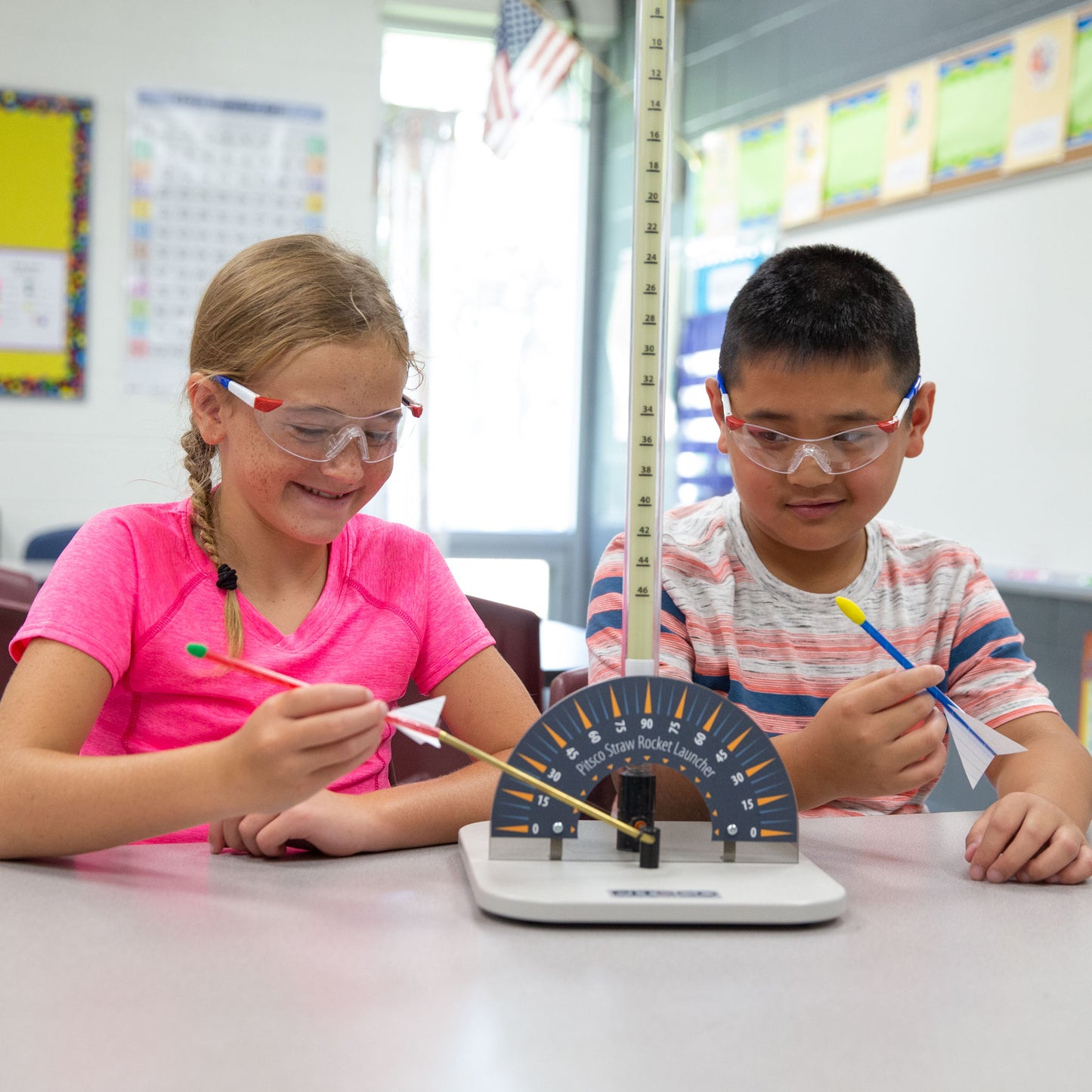
  • 2 Straw Rocket Launchers
  • 2 Straw Rocket Refill Packs
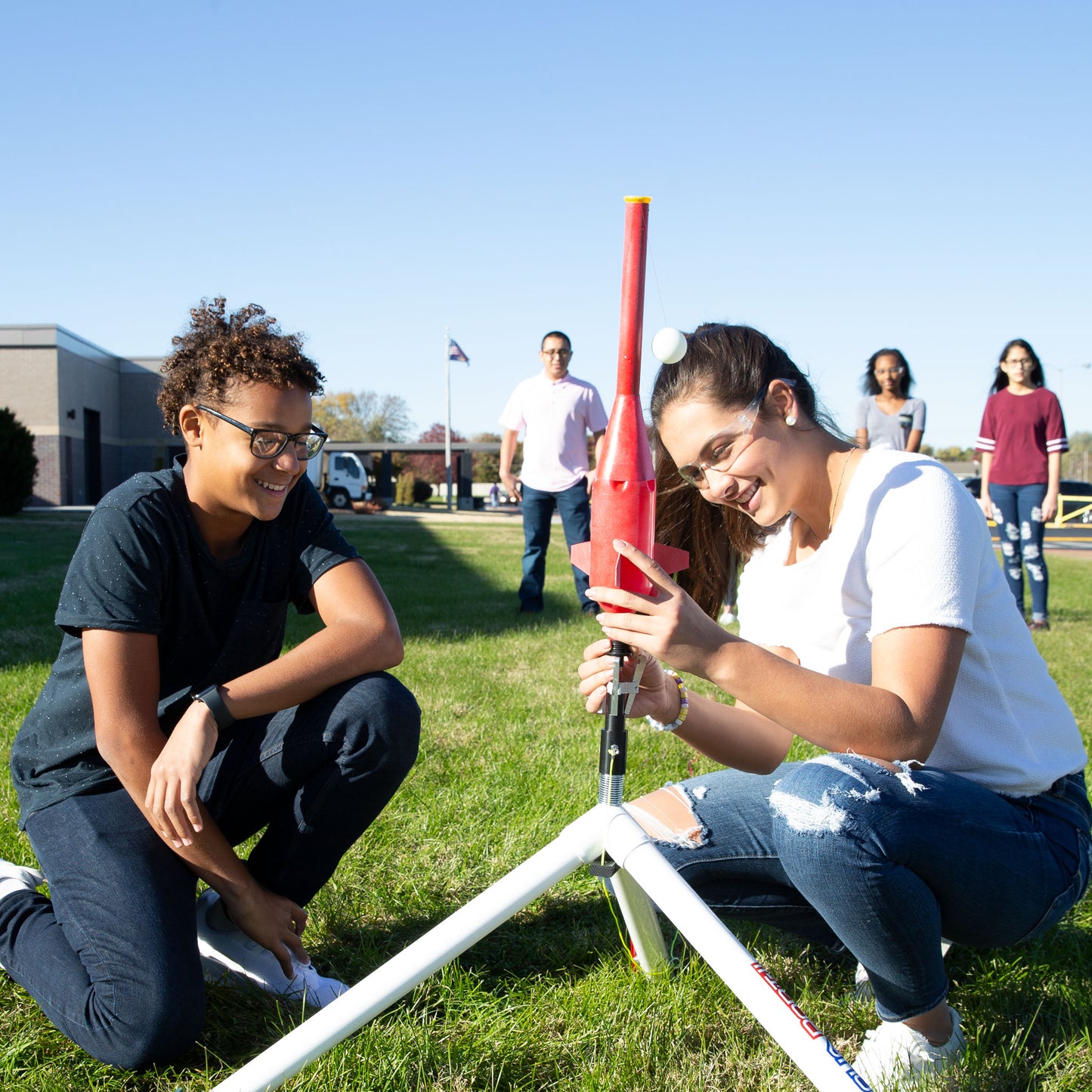
  • AquaPort II Water Rocket Launcher
  • 24 Zip Line Rockets STEM Boost Kit
  • 24 Ruler, Metal, English/Metric (18”)
  • 2 Graph Paper
  • 12 Lefty/Righty Scissors
  • 4 Race Ramps
  • 4 Fold and Roll Sticks
  • 15 Gravity Racer Kits
  • 4 Masking Tape (3/4”)
  • 24 Plastic Mini Ducks
  • 12 Transparent Tape
  • 6 Colored Pencils
  • Assorted Construction Paper
  • 24 R2K Water Rocket Kits
  • 2 20oz Plastic Bottle 30-Packs
  • 12 Cordless/Corded Dual-Temp Glue Gun
  • 2 Multi-Temp Glue Slugs
  • 12 The Pumper
  • Plastic Beaker Set
  • 2 Pro Survivor Stopwatches
  • Teacher Resources
  • 6 Estes Altitrak Altitude Finders
  • 5 Gallon Tank
SPECIFICATIONS & SAFETY
  • Curriculum length: 34 Class Periods
  • Students Served: 24
View full details
STEM Explorers: Aerospace
STEM Explorers: Aerospace

Regular price $2,499.00
Regular price $0.00 Sale price $2,499.00

Frequently Bought Together

1
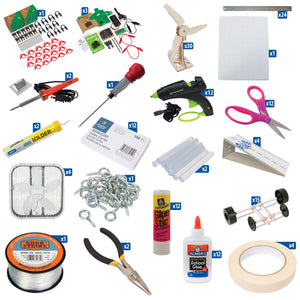
Collage of various tools and materials with quantities indicated.
+
2
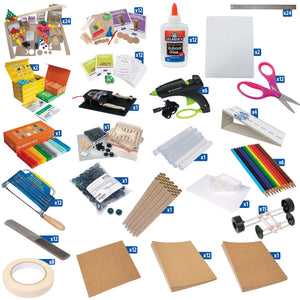
Assorted craft and construction tools
+
3
inventions kit, creating inventions kit, 3doodler kit, ap dragsters kit and launcher, and various materials and tools

Total: $14,697.00 (3 items)
STEM Explorers: Aerospace

Launch. Measure. Redesign. Repeat.

Students do not just watch rockets fly—they engineer them to fly farther, straighter, and higher. Through iterative design challenges with straw rockets, water rockets, and zip line systems, students apply physics and math to real flight problems and see the results instantly.
Rocket Design Challenges

Rocket Design Challenges

Students build straw rockets and water rockets, testing variables like launch angle, fin design, nose cone mass, and fuel pressure to optimize flight performance.

Zip Line Engineering

Zip Line Engineering

Teams construct zip line rocket systems, investigating slope, string tension, and payload—then redesign balloon-powered rides to transport characters.

Data-Driven Iteration

Data-Driven Iteration

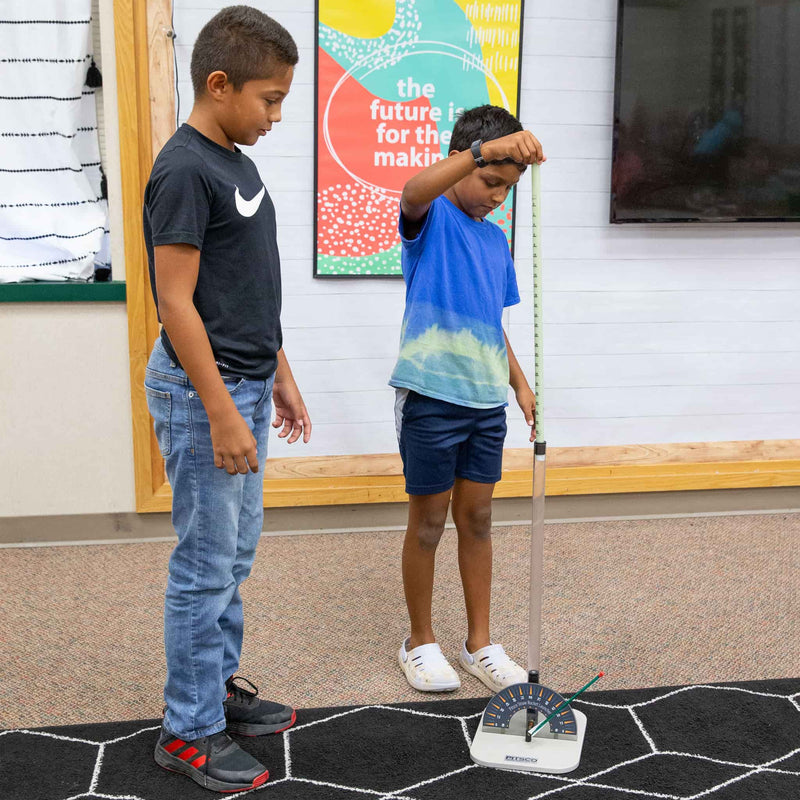
Students use altitude finders and stopwatches to collect real flight data, then analyze results to guide their next design cycle.

Cross-Curricular Connections

Cross-Curricular Connections

Lessons integrate physics (motion, force, energy), math (measurement, graphing, trigonometry), and engineering design process skills.

What Students Will Do

From their first straw rocket launch, students are measuring, hypothesizing, and redesigning—building the scientific reasoning and engineering habits that carry into every STEM course that follows.
  • Test how launch angle affects rocket flight distance
  • Vary nose cone mass and observe impact on trajectory
  • Design and test different fin shapes for flight stability
  • Calculate apogee using altitude finders and trigonometry
  • Build a water-delivery rocket to solve a firefighting challenge
  • Construct and test a balloon-powered zip line ride

Compare Similar Products

Feature Current Product
STEM Explorers: Aerospace
STEM Explorers: Design and Build STEM Explorers: Environmental Science and Sustainability
Price $2,499.00 $4,999.00 $3,799.00
Primary Focus Flight Science and RocketryStructural Engineering Renewable Energy
Grade Level Grades 6–8Grades 6–8 Grades 6–8
Curriculum Length 34 class periods40 class periods 39 class periods
Key Activities Straw rockets, water rockets, zip line systemsTowers, bridges, earthquake-resistant structures Solar vehicles, wind turbines, energy systems
Materials Science
Outdoor Activities
Best For Schools wanting an engaging, affordable entry to hands-on STEM with outdoor launch activitiesPrograms focused on structural design, testing, and engineering problem-solving Schools emphasizing sustainability, environmental science, and clean energy technology
View Details View Details

Step 1—Unbox and Organize: Review the materials list and set up lab stations for teams of two. All materials are classroom-ready—no special tools or facilities required.

Step 2—Introduce the Unit: Begin with the Action Reaction unit. Students learn about forces acting on zip lines, then construct and test their own zip line rocket systems.

Step 3—Explore Variables of Rocket Flight: Students build straw rockets and systematically test launch angle, rod height, rocket length, nose cone mass, and fin design—recording data and drawing conclusions after each test.

Step 4—Water Rocket Engineering: Teams design and construct water bottle rockets, experiment with fuel pressure and water volume, calculate apogee using altitude finders, and complete a firefighting design challenge.

Step 5—Analyze and Present: Students review their data across all units, identify patterns, and present findings to the class—defending their best designs with evidence.

Launch Learning Through the Science of Flight

Aerospace connects abstract physics to something students can see, feel, and hear. When a rocket climbs higher after a redesign, the lesson sticks. The STEM Explorers: Aerospace program puts students in the role of flight engineers—testing hypotheses, collecting data, and iterating on designs through thirty-four class periods of hands-on challenges.

Students explore how aerospace principles support professionals in fields such as

  • Aerospace engineering and aircraft design
  • Meteorology and atmospheric science
  • Military and defense technology
  • Space exploration and propulsion systems
  • Sports science and projectile analysis

They do not just read about forces. They launch, measure, and redesign to prove what works.

Science

  • Newton’s laws of motion applied to rocket propulsion
  • Forces acting on objects in flight—thrust, drag, lift, gravity
  • Controlled experimentation with single-variable testing
  • Energy transformation from potential to kinetic energy

Technology

  • Altitude measurement tools and data collection instruments
  • Graphing and data analysis to identify trends
  • Design software and engineering notebooks for documentation
  • Stopwatches and precision measurement techniques

Engineering

  • Iterative design process—build, test, analyze, redesign
  • Designing to specifications and constraints
  • Optimizing variables for maximum performance
  • Presenting engineering solutions with supporting data

Math

  • Measuring angles, distances, and heights
  • Basic trigonometry for calculating apogee
  • Graphing flight data and interpreting results
  • Ratios, proportions, and unit conversion

Action Reaction (4 lessons):

• About Zip Lines—Learn about the forces that act upon zip lines

• Construct the Rocket and Zip Line—Construct, test, and observe a zip line rocket

• Let’s Investigate a Little Further—Investigate the effect of slope on zip line rocket performance

• Bear the Load—Design a balloon-powered zip line ride to transport a small character

Variables of Rocket Flight (7 lessons):

• About Rockets—Gain foundational knowledge related to rockets

• Launch Angle—Experiment with different launch angles and determine the best angle for maximum distance

• Launch Rod Height—Learn the effect of different launch rod heights on flight distance

• Achieving Accurate Flight—Design a rocket that lands inside a target within three launch attempts

• Rocket Length—Explore the impact of rocket body length on flight

• Nose Cone Mass—Vary nose cone mass and observe the effect on flight

• Fin Design—Test different fin designs and observe how each affects flight

Motion Force Mass (8 lessons):

• Propulsion—Introduction to water rockets and unit overview

• Construction—Design and construct a water bottle rocket

• Fuel Pressure Testing and Analysis I—Experiment with different air pressures to test effects on apogee

• Computing Apogee II—Experiment with different water volumes to test effects on apogee

• Fuel Pressure Testing and Analysis II—Use the altimeter and trigonometric functions to calculate apogee

• Fuel Pressure and Testing Analysis II—Experiment with fuel pressures to test effects on apogee

• Fin Design—Design different fin shapes for the water rocket and test effects on flight

• Challenge: Ready, Aim, Fire—Create a model water-delivery rocket for fighting fires

Why Teachers Love STEM Explorers: Aerospace

Thirty-Four Class Periods

Thirty-Four Class Periods

A full semester of structured, hands-on STEM curriculum ready to teach from day one.

Real Flight Science

Real Flight Science

Students launch actual rockets, collect real data, and make evidence-based design improvements.

No Special Facilities

No Special Facilities

Everything you need is in the box. Set up in any classroom and launch outdoors on any field.

Iterative Design Built In

Iterative Design Built In

Every unit follows the engineering design process—students build, test, analyze, and redesign.

Cross-Curricular Integration

Cross-Curricular Integration

Lessons connect physics, math, and engineering through meaningful, hands-on challenges.

Backed by Fifty Years

Backed by Fifty Years

Pitsco has been trusted by educators for hands-on STEM since 1971.

"Your curriculum is deeper. You deliver 21st-century skills that truly teach kids how to not just look at the content but also be able to communicate and work collaboratively. And there is no comparison to your customer service."

—Cary Johnson, K-12 Director of Innovation and Technology, Placentia-Yorba Linda Unified School District, CA

Flexible Purchasing Options

Pricing and volume discounts are built in—choose the path that fits your purchasing process.

Buy Online

Best if you know what you need and can buy online.

Ready to purchase now? Add this to your cart for fast, easy checkout.

Request a Quote

Need a quote for approval or purchase order processing?

Request a quote or connect with an Education Advisor before purchasing.

Request a Quote

Get Expert Guidance

Exploring options or planning a larger implementation?

Our Education Advisors can help with product selection, curriculum, and professional learning.

Book a Meeting

Frequently Asked Questions

What grade levels is this program designed for?

STEM Explorers: Aerospace is designed for Grades 6–8. The curriculum scales naturally for different ability levels, and the hands-on challenges engage students across the middle school spectrum.

Do teachers need a science background to teach this?

No. The teacher resource guide includes complete lesson plans, setup instructions, answer keys, and assessment rubrics. Any teacher can confidently lead these activities regardless of prior STEM experience.

Is this program aligned to standards?

Yes. Lessons align to Next Generation Science Standards (NGSS) for middle school physical science and engineering design, as well as Common Core math standards for measurement, data analysis, and geometry.

Do we need special facilities or outdoor space?

Most lessons work in a standard classroom. Water rocket launches require outdoor space—any open field or parking lot works. No lab equipment or special infrastructure is needed.

How long does the program take to complete?

The curriculum spans thirty-four class periods. Schools can teach it as a full semester course, a nine-week rotation, or spread across the year depending on scheduling needs.

Are consumable materials replaceable?

Yes. Straw rocket refill packs, water rocket kits, and other consumable materials are available separately from Pitsco for easy replenishment year after year.