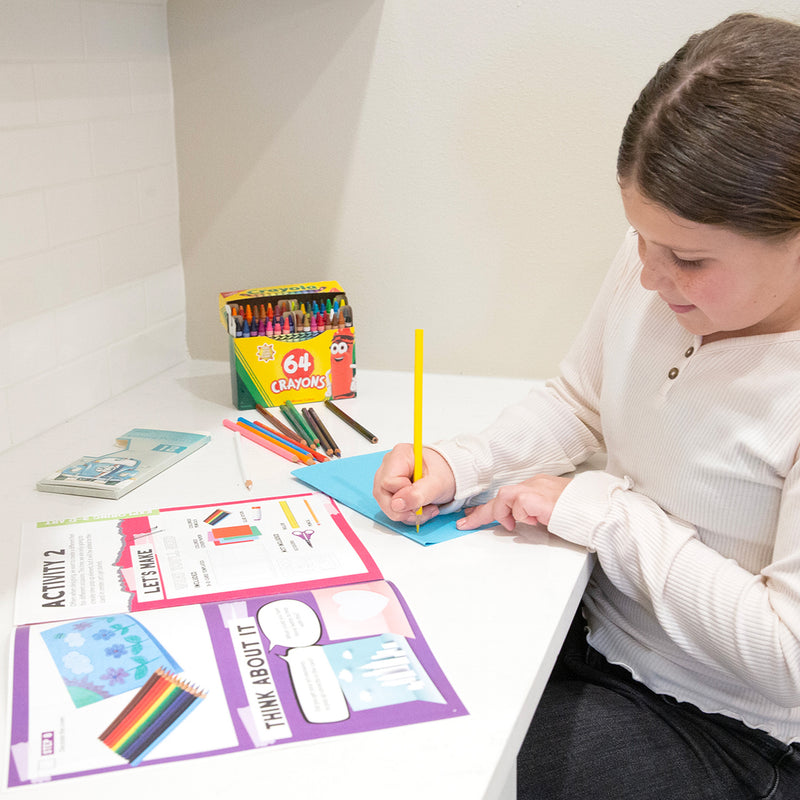
3-D Art STEM Boost Kit

Regular price $16.75
Regular price $0.00 Sale price $16.75
Grades 3-5

3-D Art STEM Boost Kit—Engineer Pop-Up Cards and 3-D Messages

Regular price $16.75
Regular price $0.00 Sale price $16.75
Shipping calculated at checkout.

⚠️ Clearance Item - Final Sale

All clearance sales are final. No returns, refunds, or exchanges.

SKU: SKU:91460

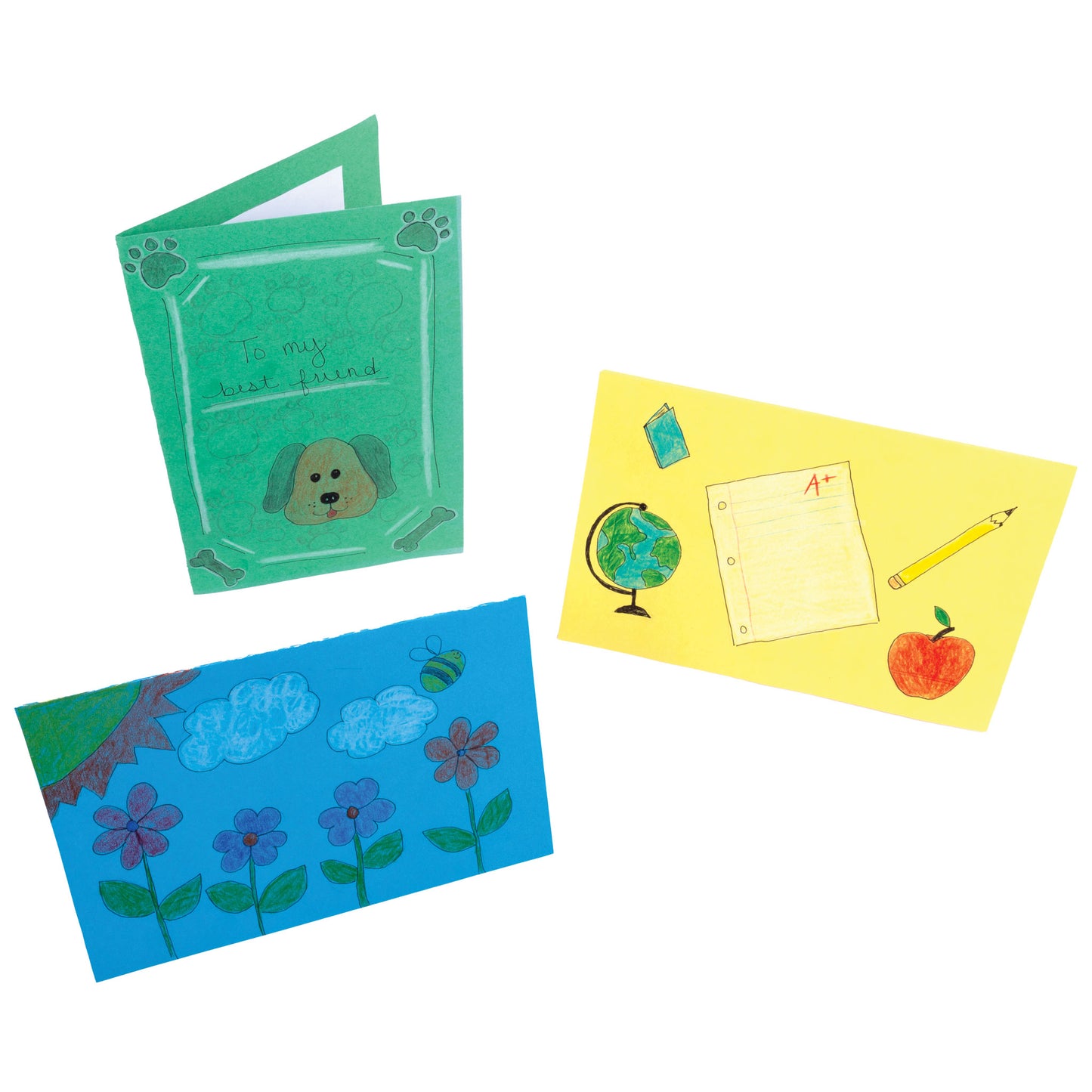
Engineer pop-up cards and 3-D messages where art meets engineering with this bilingual STEM Boost Kit for grades 3–5. Includes English and Spanish guides, colored pencils, cardstock, transparencies, templates, and all needed materials. 1 student per kit.

In stock

Students Served: 1 student
Engineer Pop-Up Cards
Art and Engineering Combined
English and Spanish Guides
1 Student Per Kit
1 Student Per Kit
WHAT'S INCLUDED
  • 2 student guides (one in English and one in Spanish)
  • Supplies to engineer and decorate pop-up cards
SPECIFICATIONS & SAFETY
  • Students Served: 1
  • Bilingual: Student guides in English and Spanish
View full details
3-D Art STEM Boost Kit

3-D Art STEM Boost Kit

Regular price $16.75
Regular price $0.00 Sale price $16.75

Frequently Bought Together

1
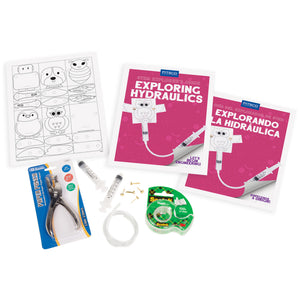
Hydraulics STEM Boost Kit
+
2
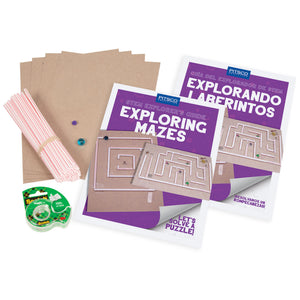
Mazes STEM Boost Kit
+
3
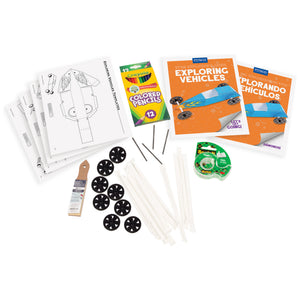
Vehicles STEM Boost Kit

Total: $49.25 (3 items)
3-D Art STEM Boost Kit

Art in Motion—Engineer Pop-Up Cards and 3-D Messages.

The 3-D Art STEM Boost Kit gives one grades 3–5 student colored pencils, cardstock, transparencies, and templates to engineer pop-up cards and 3-D messages — discovering how paper mechanics, fold patterns, and layered transparencies create three-dimensional effects that sit at the intersection of art and engineering.
Engineer Pop-Up Cards

Engineer Pop-Up Cards

Students use templates and fold patterns to design and build pop-up card mechanisms — the same paper-mechanics thinking that underpins product packaging, architectural models, and greeting card engineering. The pop-up reveal is both the payoff and the proof that the engineering worked.

Transparencies Create the 3-D Effect

Transparencies Create the 3-D Effect

Layering colored transparencies over cardstock creates depth and dimension that a flat card can't achieve. Students experiment with how transparency placement, color overlap, and layering order change what the finished 3-D message looks like — materials science made visual.

Art Meets Engineering

Art Meets Engineering

This is the only STEM Boost Kit that explicitly bridges creative art and engineering design. Students aren't decorating a completed project; they're making design decisions — fold angles, layer order, color choices — that determine whether their card works and how it looks.

Bilingual by Default

Bilingual by Default

Two complete student guides — one in English, one in Spanish — are included in every kit at no extra cost. Every grades 3–5 learner accesses the full pop-up card engineering experience in their home language without any modifications or additional materials.

What Students Will Do

Following the bilingual student guide, grades 3–5 students work through an engineering design challenge that combines paper mechanics with creative expression — making design decisions at every stage and seeing the results in three dimensions.
  • Study templates and plan a pop-up card or 3-D message design
  • Select cardstock colors and transparency combinations
  • Score, fold, and assemble pop-up card mechanisms using templates
  • Layer colored transparencies to create depth and 3-D effects
  • Use colored pencils to add detail and personalize the design
  • Attach elements with the included glue stick
  • Test the pop-up mechanism — does it open and close cleanly?
  • Refine the design: adjust fold angles or layer order and test again

Compare Similar Products

Feature Current Product
3-D Art STEM Boost Kit
Bird Feeders STEM Boost Kit Mazes STEM Boost Kit
Price $16.75 $13.75 $13.75
Primary Focus Pop-up card engineering + 3-D art (STEAM)Bird feeder design + local wildlife Maze design + spatial reasoning
Grade Level Grades 3–5Grades 3–5 Grades 3–5
Bilingual Guides
Students Per Kit 1 1
Art / Creative Design Component 1
Engineering Design
Key Learning Hook How fold patterns + transparencies create 3-D effectsBuild a real feeder for local wildlife Design a path through a maze using spatial logic
View Details View Details

Step 1—Read the student guide introduction: understand what pop-up card mechanisms are, how fold patterns create movement, and how transparencies add depth.

Step 2—Choose a design: study the included templates and plan your pop-up card or 3-D message. Which template will you use? What colors of cardstock and transparency will you layer?

Step 3—Prepare the base: select cardstock and score or fold the base card following the student guide instructions.

Step 4—Build the pop-up mechanism: follow the template to cut, score, and fold the pop-up element. Attach with the included glue stick.

Step 5—Layer the transparencies: place colored transparency sheets to create depth and the 3-D effect. Adjust placement and overlap to change the result.

Step 6—Add detail: use colored pencils to add illustration, text, or design to personalize the card.

Step 7—Test: open and close the card. Does the pop-up mechanism work cleanly? Adjust fold angles or glue placement and test again.

The 3-D Art STEM Boost Kit is the only kit in the Grades 3–5 STEM Boost series that explicitly positions art and engineering as the same activity. Students aren't decorating a finished STEM project — they're making engineering decisions (fold angle, layer order, material selection) that directly determine the aesthetic outcome. Changing the fold changes the pop-up. Changing the transparency layer order changes the color and depth of the 3-D effect.

This positions the kit as a strong fit for both STEAM-focused schools and art programs looking for projects with measurable design criteria. The pop-up card mechanism is also a recognized entry point to paper engineering and product design — students who understand how pop-up cards work can extend that thinking to book design, packaging engineering, and architectural models.

Support Materials

Videos, guides, and resources to help you get the most out of this product.

Why Teachers Love 3-D Art STEM Boost Kit

Immediate Validation

Immediate Validation

When a student opens their pop-up card and it works, they've just demonstrated that their engineering decisions were correct. The pop-up reveal isn't just satisfying — it's an immediate feedback loop that validates the design process without any teacher evaluation required.

Transparencies Are the Differentiator

Transparencies Are the Differentiator

Transparency sheets signal that this kit goes beyond standard craft activity into genuine visual design and materials exploration — a distinction that matters when selecting kits for STEAM programs or art integration curricula.

STEAM Without the Compromise

STEAM Without the Compromise

Art and engineering aren't in tension here — they're the same activity. Students make engineering choices (fold angle, layer order) that produce aesthetic outcomes. Teachers in both STEM and arts programs can use this kit with equal legitimacy.

Bilingual Out of the Box

Bilingual Out of the Box

English and Spanish student guides are both in the box. Grades 3–5 teachers in multilingual classrooms don't need to order separately or adapt anything — every student accesses the full pop-up card engineering experience in their home language.

One Student, One Kit

One Student, One Kit

At $16.75 per kit for one grades 3–5 student, cost-per-learner pricing is clear and scalable. Order by class size with no bundle minimum, no volume requirement, and no additional materials to source.

Fits Art, STEM, and STEAM Programs

Fits Art, STEM, and STEAM Programs

The kit's confirmed art-and-engineering framing makes it a natural fit for three different program contexts: a STEM class looking for a creative design challenge, an art program looking for engineering integration, or a STEAM program looking for an activity where both disciplines are genuinely present.

Flexible Purchasing Options

Pricing and volume discounts are built in—choose the path that fits your purchasing process.

Buy Online

Best if you know what you need and can buy online.

Ready to purchase now? Add this to your cart for fast, easy checkout.

Request a Quote

Need a quote for approval or purchase order processing?

Request a quote or connect with an Education Advisor before purchasing.

Request a Quote

Get Expert Guidance

Exploring options or planning a larger implementation?

Our Education Advisors can help with product selection, curriculum, and professional learning.

Book a Meeting

Frequently Asked Questions

What do students make with the 3-D Art STEM Boost Kit?

Students engineer pop-up cards and 3-D messages using templates, cardstock in a variety of colors, colored transparencies, a glue stick, and colored pencils. The student guide walks them through scoring and folding pop-up card mechanisms, layering transparencies to create 3-D depth effects, and adding illustration with colored pencils. The activity closes when the card opens and the pop-up mechanism works — the reveal is the proof that the engineering design was correct.

How does engineering connect to pop-up card design?

Every decision in building a pop-up card is an engineering decision: the fold angle determines how high the pop-up rises. The score depth affects how cleanly the card opens. The glue placement determines whether the mechanism holds. Students are applying criteria and constraints — the same framing as the engineering design process — to a creative artifact. When the card doesn't open correctly, students debug it the same way an engineer would: identify the failure point and adjust.

Can this kit be used in an art class as well as a STEM class?

Yes. The 3-D Art STEM Boost Kit is explicitly designed for both contexts. The learning outcome combines engineering design thinking (fold patterns, layer order, material selection) with creative expression (color choice, illustration, 3-D composition). Art teachers can use it as an engineering-integrated design project; STEM teachers can use it as a STEAM activity with measurable design criteria. Both framings are accurate and supported by the confirmed product description.