Straw Structures – Getting Started Package

Regular price $279.00
Regular price $0.00 Sale price $279.00
Grades 3-12

Straw Structures – Getting Started Package—Build Geometric Shapes with 30 Students

Regular price $279.00
Regular price $0.00 Sale price $279.00
Shipping calculated at checkout.

⚠️ Clearance Item - Final Sale

All clearance sales are final. No returns, refunds, or exchanges.

SKU: SKU:35757

The Straw Structures Getting Started Package gives 30 students the materials to build three-dimensional geometric shapes using paper straws and pipe cleaners. Students explore structural engineering, geometry, and design by constructing polyhedra, towers, and bridges from simple, affordable materials.

In stock

Students Served: 30 students
Hands-On Building
Hands-On Building
Geometry + Engineering
Downloadable Guides
Downloadable Guides
30-Student Set
30-Student Set
WHAT'S INCLUDED
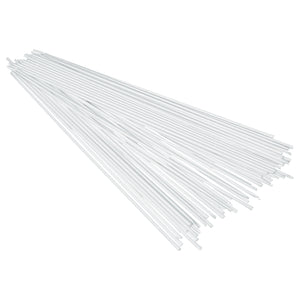
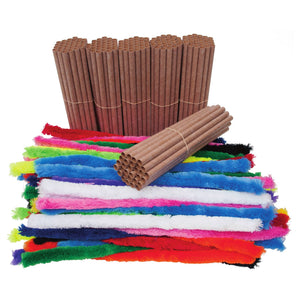
  • 4 packages of paper straws (500 each, 2,000 total)
  • 30 packages of pipe cleaners (100 each, 3,000 total)
  • Polyhedra Poster
  • User guides
SPECIFICATIONS & SAFETY
  • Students Served: 30
  • Tools and Materials Required: Scissors
View full details
Straw Structures – Getting Started Package

Straw Structures – Getting Started Package

Regular price $279.00
Regular price $0.00 Sale price $279.00

Frequently Bought Together

1
Straw Structures Teacher’s Guide
+
2
Art Straws for Structures
+
3
Large Structures Package

Total: $190.25 (3 items)
Straw Structures – Getting Started Package

Shape. Connect. Build. Discover.

Paper straws and pipe cleaners become precision building materials as students construct geometric shapes, test structural integrity, and explore the mathematics behind three-dimensional forms.
Simple Materials, Real Engineering

Simple Materials, Real Engineering

Paper straws and pipe cleaners are lightweight, safe, and affordable. Students use these materials to explore the same structural principles found in bridges, buildings, and towers.

Geometry in Three Dimensions

Geometry in Three Dimensions

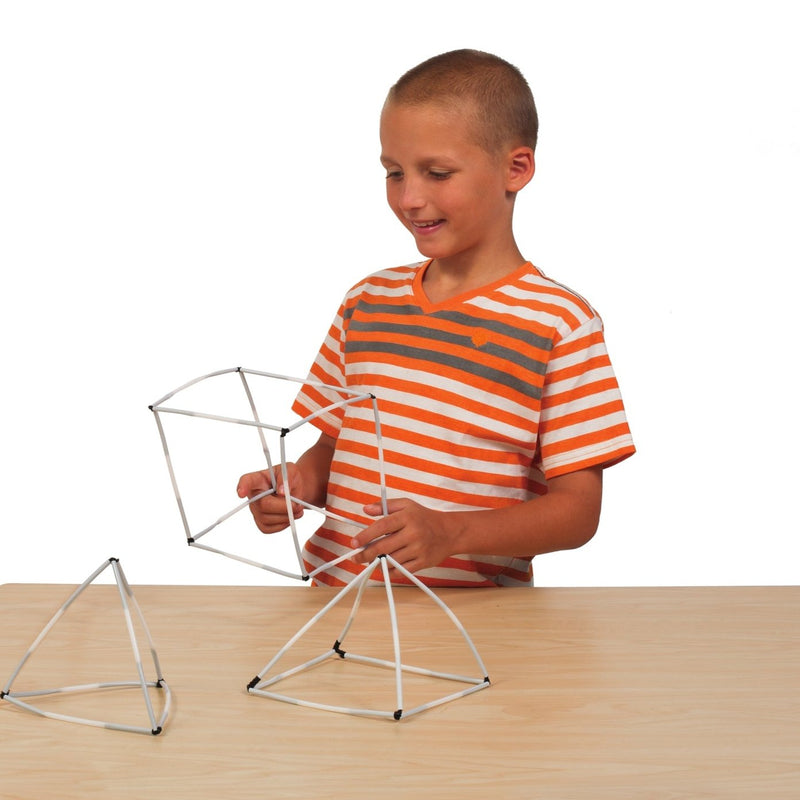
Students move beyond flat diagrams to build actual polyhedra, prisms, and pyramids. The included Polyhedra Poster provides visual reference for target shapes.

Class Pack for 30 Students

Class Pack for 30 Students

With 2,000 straws and 3,000 pipe cleaners, the Getting Started Package provides enough materials for an entire class to build simultaneously.

Downloadable Curriculum Support

Downloadable Curriculum Support

Four downloadable guides (Teacher’s Guide, Elementary STEM Activity Guide, Geosolids User Guide, and STEM Connections) provide lesson plans for multiple grade levels.

What Students Will Do

From basic shapes to complex structures, students progress through increasingly challenging builds while applying math and science concepts.
  • Build three-dimensional geometric shapes including cubes, tetrahedra, and octahedra
  • Connect straws using pipe cleaners to create stable joints and vertices
  • Test structural integrity by applying force to completed shapes
  • Explore how triangulation strengthens structures
  • Measure angles and edge lengths to connect geometry to physical construction
  • Design and build towers, bridges, or free-form structures
  • Compare the strength-to-weight ratio of different geometric forms

Compare Similar Products

Feature Current Product
Straw Structures – Getting Started Package
Large Structures Package Structural Design STEM PBL Unit
Price $279.00 $99.75 $495.00
Primary Focus Paper straw geometric structuresLarge-scale pipe cleaner structures Project-based structural design
Grade Level Grades 3–12Elementary (K–5) Grades 6–12
Students Served 301-4 30
Building Material Paper straws + pipe cleanersJumbo chenille stems and cardboard body tubes Paper straws + pipe cleaners
Includes Curriculum Downloadable guidesElementary STEM Activity Guide Full PBL unit with PBL Activator Guide
Tools Required ScissorsNone Scissors
Best For Classrooms wanting an affordable, hands-on geometry and engineering activity for a full class of 30 studentsIndividual or small-group shape exploration for younger learners Programs ready for a multi-week structural engineering unit with career connections and 3-D printing integration
View Details View Details

Step 1—Distribute Materials: Give each student a supply of paper straws and pipe cleaners. Display the Polyhedra Poster where all students can see it.

Step 2—Introduce Connections: Show students how to insert pipe cleaner ends into straw openings to create stable joints. One pipe cleaner can connect two straws at a vertex.

Step 3—Start with Basic Shapes: Students build two-dimensional shapes first (triangles, squares, pentagons) to practice connection techniques and understand edge-vertex relationships.

Step 4—Build Three-Dimensional Forms: Students use the Polyhedra Poster and downloadable guides to construct cubes, tetrahedra, octahedra, and other polyhedra.

Step 5—Design and Test: Students design their own towers, bridges, or free-form structures and test them for height, strength, or aesthetic criteria. Use the STEM Connections resource to tie activities to math and science standards.

Geometry You Can Hold

The Straw Structures Getting Started Package transforms abstract geometry concepts into physical objects students build with their own hands. Instead of calculating vertex counts and edge lengths from a diagram, students construct actual polyhedra and discover these properties through direct observation.

Engineering Thinking Through Simple Materials

Paper straws and pipe cleaners are deliberately simple. There are no electronic components to troubleshoot and no batteries to charge. This simplicity keeps the focus on structural engineering fundamentals: how shapes distribute force, why triangles are inherently stable, and how joints affect the strength of a complete structure.

Accessible Across Grade Levels

The same materials work for a third-grader building a cube and a twelfth-grader optimizing a truss bridge. Younger students explore shapes and counting, while older students calculate angles, analyze load distribution, and connect their builds to real-world civil engineering. Four downloadable guides support this full range.

Teacher Resources:

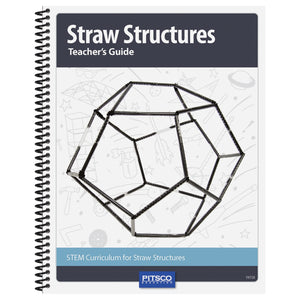
  • Straw Structures Teacher’s Guide—lesson plans, learning objectives, and activity sequences (also available as a printed guide, SKU 59728)
  • Elementary STEM Activity Guide—age-appropriate adaptations for Grades 3–5
  • Geosolids User Guide—reference for three-dimensional shape properties
  • STEM Connections—cross-curricular ties to math and science standards

Tools Required:

  • Scissors (not included)—for cutting straws to custom lengths

Customer Support:

  • Pitsco Education’s customer service team is available for product questions
  • Education Advisors can help plan implementation for your classroom or district

Support Materials

Videos, guides, and resources to help you get the most out of this product.

Why Teachers Love Straw Structures

Full Class Coverage

Full Class Coverage

Materials for 30 students included. Every student builds at the same time with no need to take turns or share kits.

Affordable Entry Point

Affordable Entry Point

One of the most cost-effective ways to bring hands-on engineering and geometry exploration to an entire class.

Simple Setup

Simple Setup

Distribute straws and pipe cleaners, and students start building. No assembly, no charging, no software setup required.

Reusable Materials

Reusable Materials

Straws and pipe cleaners can be separated and reconfigured multiple times, giving students room to iterate on designs.

Scales with Student Ability

Scales with Student Ability

Works for a third-grader learning to count edges and vertices or a high schooler optimizing a truss bridge for load bearing.

Cross-Curricular Connections

Cross-Curricular Connections

Activities naturally connect to math (geometry, measurement), science (forces, structures), and engineering design standards.

Flexible Purchasing Options

Pricing and volume discounts are built in—choose the path that fits your purchasing process.

Buy Online

Best if you know what you need and can buy online.

Ready to purchase now? Add this to your cart for fast, easy checkout.

Request a Quote

Need a quote for approval or purchase order processing?

Request a quote or connect with an Education Advisor before purchasing.

Request a Quote

Get Expert Guidance

Exploring options or planning a larger implementation?

Our Education Advisors can help with product selection, curriculum, and professional learning.

Book a Meeting

Frequently Asked Questions

How many students does the Getting Started Package serve?

The package includes materials for 30 students. With 2,000 paper straws and 3,000 pipe cleaners, each student has enough supplies for multiple building projects across a full unit.

What grades can use this package?

Straw Structures works for Grades 3–12. Younger students focus on building basic shapes and counting edges and vertices. Older students tackle advanced structural challenges like load-bearing towers and bridge design.

Do I need a separate teacher’s guide?

The Getting Started Package includes a downloadable Teacher’s Guide with lesson plans and activity ideas. A printed version is available separately (SKU 59728) if you prefer a physical copy.

What tools do students need?

Scissors are the only tool required, and they are not included in the package. Students use scissors to cut straws to custom lengths for specific builds.

Can I order replacement straws and pipe cleaners?

Yes. Paper Straws (SKU 46621, box of 800) and Pipe Cleaners (SKU 54853, pack of 100) are available separately for replenishing materials.

How does this differ from the Large Structures Package?

How does this differ from the Large Structures Package? The Straw Structures Getting Started Package uses paper straws and standard pipe cleaners for 30 students. The Large Structures Package (SKU 38598) uses jumbo chenille stems for larger builds suited to 1–4 younger students. Choose the Getting Started Package for a full classroom and the Large Structures Package for small-group elementary exploration.