Life Cycles PreK-2 Activity Bundle

Regular price $329.00
Regular price $0.00 Sale price $329.00
Grades PreK-2

Life Cycles Reveals How Every Living Thing Grows and Changes

Regular price $329.00
Regular price $0.00 Sale price $329.00
Shipping calculated at checkout.

⚠️ Clearance Item - Final Sale

All clearance sales are final. No returns, refunds, or exchanges.

SKU: SKU:91305

From seed to flower, from egg to butterfly — life cycles are everywhere once students know how to look. The Life Cycles PreK–2 Activity Bundle uses hands-on fabric life cycle bags and a recycled-materials engineering challenge to teach students how organisms grow, change, and pass traits to their offspring. Two activities and one engineering challenge serve 10–12 students with zero prep and full standards alignment.

Out of Stock - Please allow 2-4 weeks for shipping.

Students Served: 10–12 students
Zero Prep Required
Zero Prep Required
Five Ready-Made Lessons
NGSS + Head Start Aligned
Cross-Curricular Learning
WHAT'S INCLUDED
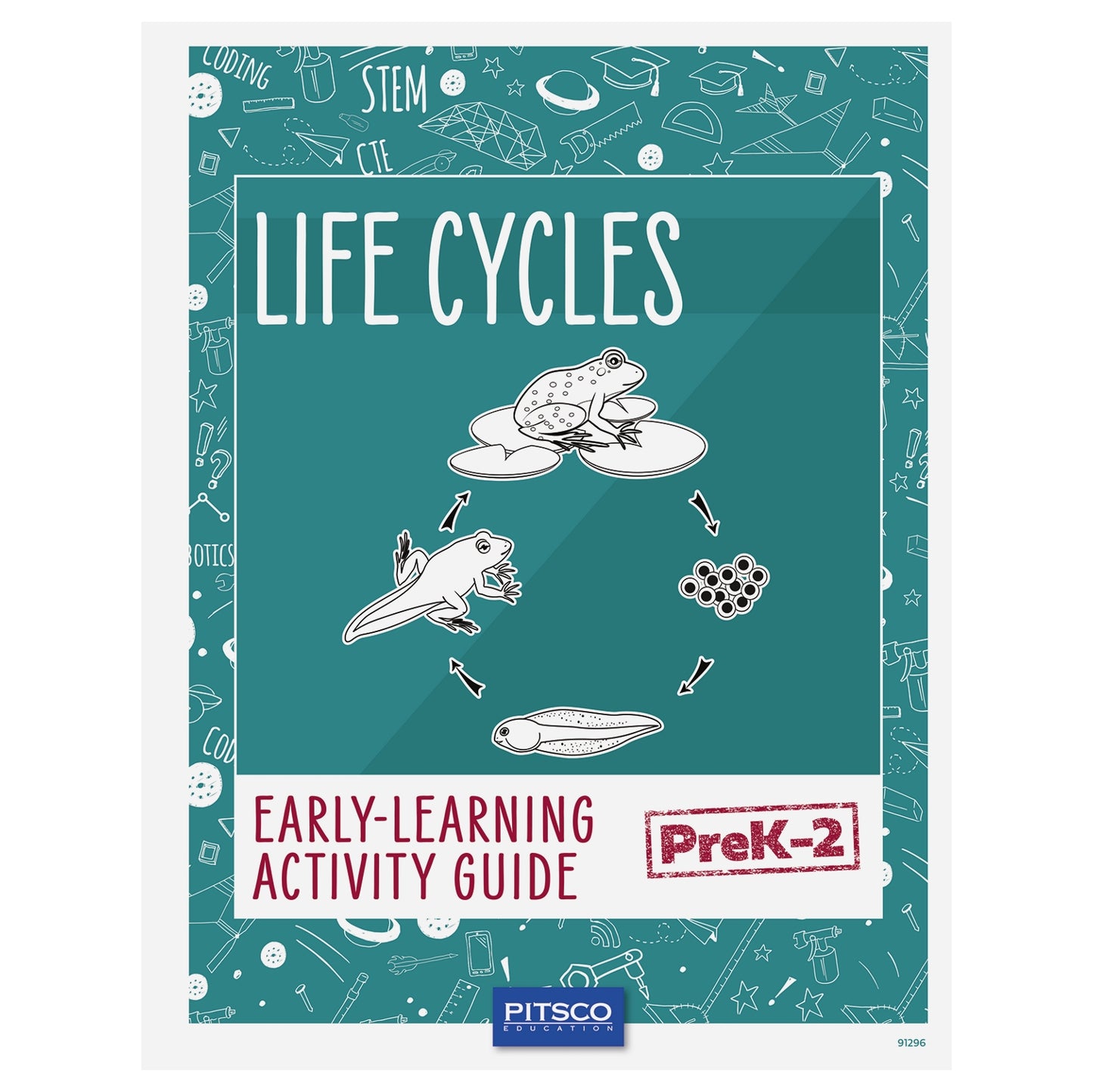
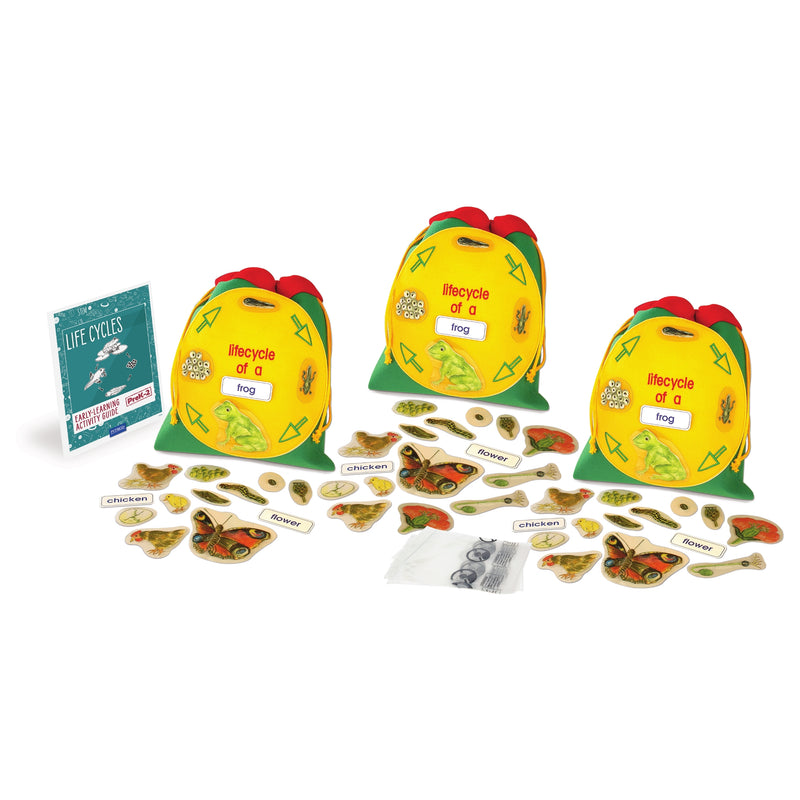
  • Activity guide
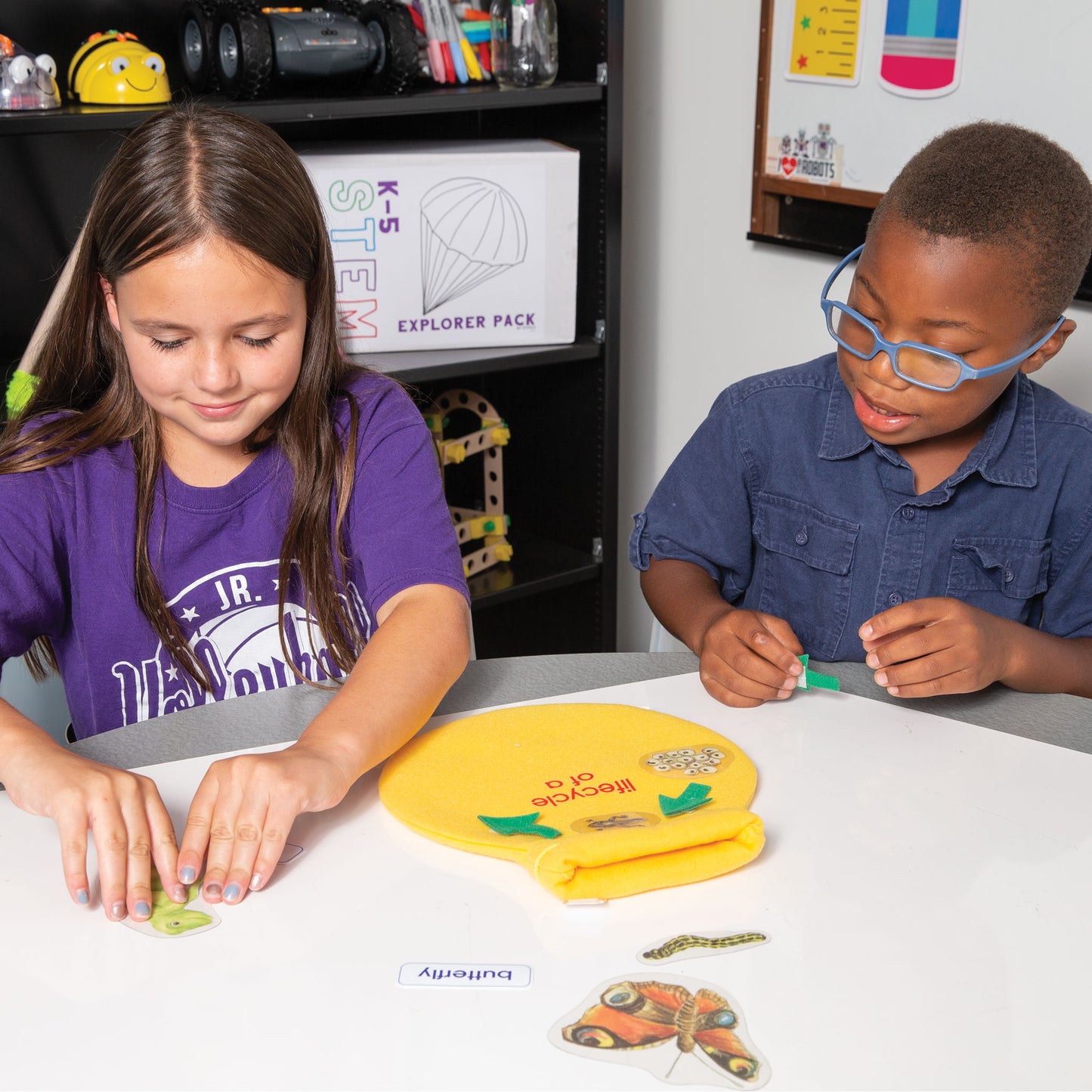
  • 3 Fabric Life Cycle Bags
  • 12 resealable plastic bags (4" x 6")
  • Hook-and-loop fastener (4')
SPECIFICATIONS & SAFETY
  • Students Served: 10-12
  • Tools and Materials Required: Recyclable materials
View full details
Life Cycles PreK-2 Activity Bundle
Life Cycles PreK-2 Activity Bundle

Regular price $329.00
Regular price $0.00 Sale price $329.00

Frequently Bought Together

1
Animal Structures PreK-2 Activity Bundle
+
2
Habitats PreK-2 Activity Bundle
+
3
Exploring Senses PreK-2 Activity Bundle

Total: $993.00 (3 items)
Life Cycles PreK-2 Activity Bundle

Watch Living Things Transform — Then Design Habitats to Support Them

Fabric life cycle bags make abstract biological concepts tangible. Students sequence stages, compare plant and animal growth, and then design habitats from recycled materials to support an organism at every stage of its life.
Tactile Life Cycle Bags

Tactile Life Cycle Bags

Three fabric bags contain removable pieces representing the stages of different life cycles. Students physically sequence and manipulate the stages, building comprehension through touch.

Parent-Offspring Comparison

Parent-Offspring Comparison

Activities guide students to observe how parents and offspring are alike and different, developing comparison and classification skills central to life science.

Recycled-Material Habitat Design

Recycled-Material Habitat Design

The engineering challenge asks teams to design a habitat that supports an organism through its entire life cycle using recyclable materials — connecting biology to engineering and environmental awareness.

Cross-Curricular Connections

Cross-Curricular Connections

Vocabulary building, sequencing, and oral presentation components address Common Core ELA standards alongside the science content.

What Students Will Do

Students explore, compare, sequence, and build — developing a deep understanding of how living things grow, change, and depend on their environments.
  • Sequence the stages of plant and animal life cycles using fabric bags
  • Compare parent and offspring traits — identify similarities and differences
  • Discuss how organisms change as they grow and develop
  • Sort life cycle stages by organism type
  • Design and build a habitat from recycled materials that supports an organism through its entire life cycle
  • Present habitat designs and explain how each feature meets the organism's changing needs

Compare Similar Products

Feature Current Product
Life Cycles PreK-2 Activity Bundle
Animal Structures PreK-2 Activity Bundle Habitats PreK-2 Activity Bundle
Price $329.00 $149.00 $715.00
Science Domain Life Science — Life CyclesLife Science — Structures Life Science — Ecosystems
Activities 2 activities + 1 engineering challenge2 activities + 1 engineering challenge 2 activities + 1 engineering challenge
Students Served 10–1210–12 10–12
Engineering Design
Literacy Integration
Materials Provided Fabric life cycle bags, resealable bags, hook-and-loop fastenerCard set, flashlight, construction paper, cotton swabs, book 4 Tree Blocks Sets
Additional Tools Required Recyclable materialsScissors, glue None
Grade Level PreK–2PreK–2 PreK–2
View Details View Details

1. Explore Life Cycles — Students open the Fabric Life Cycle Bags, examine the removable stage pieces, and work together to sequence the stages of plant and animal life cycles.

2. Compare Parents and Offspring — The teacher guides a discussion about how parents and offspring are alike and different. Students observe examples and record their findings.

3. Design a Life Cycle Habitat — Teams choose an organism, identify what it needs at each life stage, and design a habitat from recycled materials that supports the organism from beginning to end. They build, test, and present their designs.

• NGSS K-LS1-2 — Construct an argument supported by evidence for how plants and animals can change the environment to meet their needs

• NGSS 1-LS3-1 — Make observations to construct an evidence-based account that young plants and animals are like but not exactly like their parents

• NGSS K-2-ETS1 — Engineering design: defining problems, developing and comparing solutions

• Common Core ELA — Vocabulary, sequencing, speaking and listening

• Head Start Early Learning Outcomes — Scientific Reasoning: living things, growth, change; Literacy: vocabulary, comprehension

• Cross-curricular connections: environmental awareness, fine motor skills, cooperative learning

Why Teachers Love Life Cycles PreK-2 Activity Bundle

Tactile Learning That Sticks

Tactile Learning That Sticks

Fabric life cycle bags let students physically handle and sequence life stages, making abstract biology concrete and memorable.

Zero Prep, Ready to Teach

Zero Prep, Ready to Teach

All specialized materials are included and ready to use. Just gather recyclable materials for the engineering challenge.

Covers Growth and Heredity Standards

Covers Growth and Heredity Standards

Activities directly address NGSS standards for life cycles, parent-offspring traits, and engineering design.

Sustainability Connection

Sustainability Connection

The recycled-material habitat challenge teaches students that engineering solutions can be resourceful and environmentally responsible.

Builds Sequencing Skills

Builds Sequencing Skills

Ordering life cycle stages develops the same sequencing ability that supports reading comprehension and mathematical reasoning.

Pairs With Other Life Science Bundles

Pairs With Other Life Science Bundles

Combine with Animal Structures and Habitats for a comprehensive PreK–2 life science curriculum.

Flexible Purchasing Options

Pricing and volume discounts are built in—choose the path that fits your purchasing process.

Buy Online

Best if you know what you need and can buy online.

Ready to purchase now? Add this to your cart for fast, easy checkout.

Request a Quote

Need a quote for approval or purchase order processing?

Request a quote or connect with an Education Advisor before purchasing.

Request a Quote

Get Expert Guidance

Exploring options or planning a larger implementation?

Our Education Advisors can help with product selection, curriculum, and professional learning.

Book a Meeting

Frequently Asked Questions

What organisms are represented in the Fabric Life Cycle Bags?

The three fabric bags cover different plant and animal life cycles, allowing students to compare how various organisms grow and change. The activity guide provides detailed information about each organism.

What recyclable materials do I need for the engineering challenge?

Common classroom recyclables work well — cardboard boxes, paper tubes, plastic containers, fabric scraps, and similar items. The activity guide includes a suggested materials list.

How does this bundle teach heredity concepts?

Students observe and discuss how offspring resemble their parents while also displaying differences. This directly addresses NGSS 1-LS3-1 and builds foundational understanding of inheritance.

Can I use this with students who are not yet reading?

Absolutely. The fabric bags are tactile and visual, requiring no reading. The activity guide includes picture-based supports and oral discussion prompts for pre-readers.

How long is each session?

Each activity and the engineering challenge is designed for one 45-minute class period. Teachers can extend sessions or split them across multiple days as needed.

Does this address Head Start standards?

Yes. The bundle aligns to Head Start Early Learning Outcomes in Scientific Reasoning (living things, growth, change) and Literacy (vocabulary, comprehension, oral communication).